Parking Lot & Garage
Lighting Design Guide
IES RP-20 compliant lighting solutions engineered for safety, uniformity, and energy efficiency
50–70%
Energy Savings
100K+
Hour Lifespan
Free
Photometric Design
Select Your Facility Type
Jump to your specific lighting requirements and product recommendations
Retail & Shopping Centers
High-traffic lots requiring enhanced security lighting
Office & Corporate Campus
Professional appearance with energy code compliance
Healthcare Facilities
24/7 safety-critical parking with emergency lighting
Multi-Family & Apartments
Resident safety with dark sky friendly fixtures
Industrial & Warehouse
Heavy-duty fixtures for truck staging and employee lots
Municipal, Schools & Churches
Budget-conscious with utility rebate qualification
Airports
FAA-compliant terminal, parking & apron lighting
Ports & Marine Terminals
High-mast lighting for container yards & docks
Auto Dealerships
High-brightness display lighting that drives sales
IES RP-20 Parking Facility Lighting Standards
Illuminating Engineering Society recommended foot-candle levels by area type
General parking — low activity
General parking — medium activity
Enhanced security areas
Entrances, exits & driveways
Pedestrian crosswalks
ADA accessible spaces
Parking garage — general
Parking garage — entry/exit (daytime)
Source: IES RP-20 (Lighting for Parking Facilities) and IES Lighting Handbook, 10th Edition. Values are guidelines; always verify local code requirements which may be more restrictive.
💡Uniformity matters more than brightness. Research by the Lighting Research Center at Rensselaer Polytechnic Institute found that parking lot users feel safer with lower average light levels and high uniformity (3:1) than higher brightness with poor uniformity (10:1).
Pole Height, Spacing & Wattage Selection Guide
The mounting height determines fixture spacing, lumen requirements, and total project cost
15–20 ft
20–25 ft ⭐ Sweet spot
25–30 ft
30–40 ft
📐Spacing rule: Space poles at 2–3× the mounting height. A 25ft pole with Type III distribution typically covers 50–75ft of throw.
Spacing tables give a starting point. For an exact pole count on your lot, send the site plan: layouts are produced with Runnax Engine and come back with every input on record.
Choosing the Right Light Distribution
The fixture optic type determines where light goes — critical for uniformity and code compliance
Type III — Forward Throw
Asymmetric pattern throwing light forward and to sides. No light behind the pole — minimizes glare back toward the street or neighbors.
Auvolar products with Type III
OT Series · PLB Series · OT02 Series
Type V — Circular Spread
Symmetric circular pattern, equal light in all directions. Ideal when a pole is surrounded by parking on all four sides.
Auvolar products with Type V
OT Series · OT02 Series
Dark Sky Compliance & Local Code Requirements
Key regulations that affect parking lot lighting design across the US
Maximum pole height
Pole height from grade to fixture top
20–25ft typical commercial; 12–15ft historic districts
Full cutoff / Zero uplight
Light emitted above horizontal
Zero light above 90°. All Auvolar area lights comply ✅
BUG Rating (IES TM-15)
Backlight, Uplight, Glare
Varies by Lighting Zone (LZ0–LZ4)
Maximum CCT
Color temperature
Dark sky: 3000K max. Standard commercial: 4000–5000K
Light trespass
Spill onto neighboring properties
0.0–1.0 fc at property line depending on zone
ASHRAE 90.1 controls
Energy code exterior lighting
Photocell + 50% dimming capability required
⚠️Always check local codes first. Municipal ordinances often override IES guidelines. Some jurisdictions require lower CCT, shorter poles, or stricter BUG ratings than national standards.
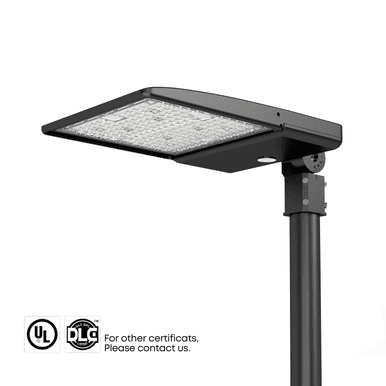
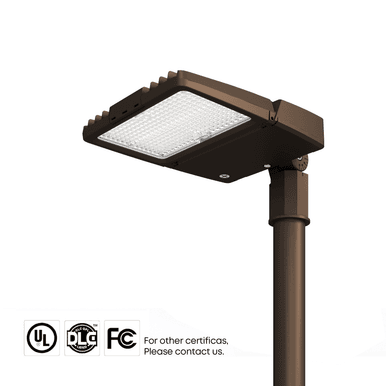
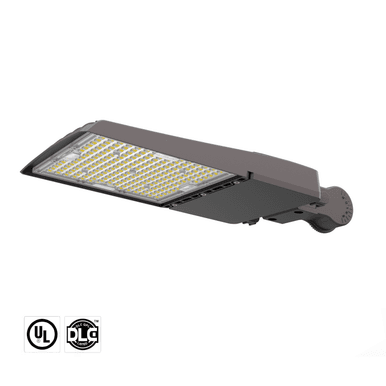
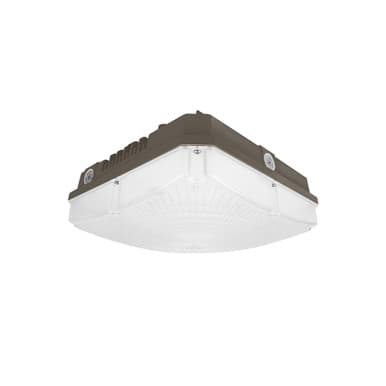
Recommended Products for Parking Lot Lighting
DLC Premium certified area lights, wall packs, and accessories
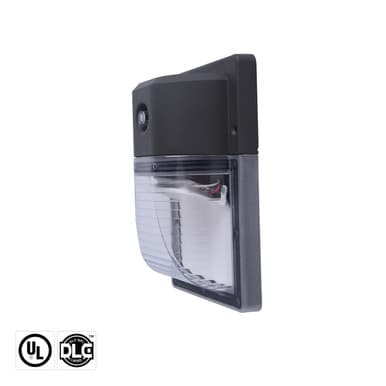
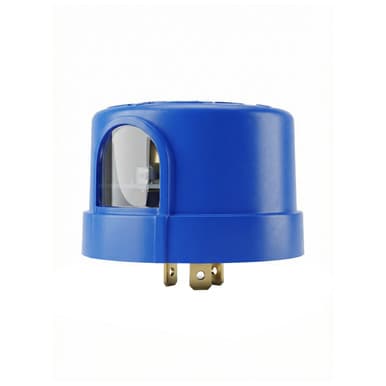
LED vs Traditional: Energy Savings Comparison
Replacing 400W metal halide shoebox lights with 150W LED area lights
Actual wattage
Annual energy (12hr/day)
Annual cost ($0.12/kWh)
Lamp life
Maintenance (5-year)
10-fixture lot annual savings
Typical payback: 1–3 years. DLC Premium qualification unlocks utility rebates of $30–$100 per fixture, further reducing payback.
Case Study
300-Space Commercial Parking Lot — Phoenix, AZ
Replaced 20 × 400W metal halide shoebox lights with Auvolar 200W LED area lights. Uniformity improved from 8:1 to 3.5:1. Dark Sky compliant installation.
$12,600/year
Annual Savings
4 months
Payback Period
3.5:1
Uniformity Achieved
Frequently Asked Questions
Who does Auvolar's photometric layouts?
Runnax, using Runnax Engine. Runnax is a separate company led by Auvolar's founder; layouts include the inputs so they can be checked in AGi32.
Ready to upgrade your parking lot lighting?
Get a free photometric layout, energy savings analysis, and custom quote for your project.