Apartment & Multi-Family
Parking Lighting Guide
Dark sky compliant, low-trespass LED lighting for residential communities — 3000K–4000K, full cutoff
64%
Energy Savings
Dark Sky
Compliant
Free
Photometric Design
IES RP-20 Residential Parking Illuminance Standards
Recommended foot-candle levels for apartment and multi-family residential parking
General apartment parking — low activity
Standard for most residential lots
General apartment parking — medium activity
Larger communities with security concerns
Building entrances & lobby approach
Resident safety at building access
ADA accessible spaces
Federal ADA Title III requirement
Visitor parking
Higher than employee — stranger unfamiliarity
Carport / covered parking
Canopy fixtures recommended
Property line / light trespass
Many municipalities: 0.0 fc at boundary
Source: IES RP-20 (Lighting for Parking Facilities). Residential dark sky ordinances may impose additional CCT, BUG, and trespass restrictions — verify locally.
🌙Dark Sky Note: Uniform 1.0–1.5 fc with 3000K warm white and full cutoff optics causes significantly fewer neighbor complaints than bright 2.0–3.0 fc with 5000K. Residents feel equally safe — the difference is perceived neighbor impact.
Pole Height, Spacing & Wattage Selection Guide
Residential communities prioritize lower poles — less intrusive appearance and lower trespass risk
12–15 ft
15–20 ft
20–25 ft
25 ft max
Light Distribution: Controlling Trespass in Residential Settings
Optical control is the most important factor in preventing neighbor complaints at apartment communities
Type III — Always at Boundaries
Mandatory for all perimeter poles in residential settings. Throws light inward — zero spill to neighbors or public streets.
Type V — Interior Only
Symmetric 360° spread — only use for interior poles where parking surrounds the fixture on all four sides, well away from property lines.
Dark Sky & Compliance Requirements
Key regulations for residential and multi-family parking lighting
Dark Sky Ordinance (local)
Full cutoff + CCT max 3000K–4000K + BUG rating limits
Check city/county code — very common in CA, CO, TX, AZ
IES TM-15 BUG Rating
Backlight, Uplight, Glare limits by Lighting Zone (LZ0–LZ2)
Residential zones typically LZ1–LZ2
ADA Title III
Minimum 2.0 fc, zero dark spots at all accessible paths
Required for all multi-family with 4+ units
Light trespass limits
0.0–1.0 fc at property line depending on jurisdiction
Most contentious issue in residential lighting disputes
CCT restriction
Dark sky: 3000K max. Standard: 4000K recommended
3000K warm white prevents blue light scatter at night
ASHRAE 90.1 (new construction)
Photocell shutoff + 50% reduction capability
Required for new multifamily construction
Lighting Solutions by Residential Scenario
Design parameters, example configurations, and recommended products for each apartment parking application
🅿️ Ground-Level Surface Parking Lot
Ground-level apartment parking is the most common scenario — and the most contested. Neighbors complain when brightness bleeds onto their property or into bedroom windows. The key is full cutoff optics pointed inward, lower pole heights (15–20ft), and warm CCT (3000K–4000K). Target 1.0–1.5 fc rather than the 2.0 fc typical of commercial lots. This is enough for safety while avoiding the "stadium effect" that generates resident complaints.
Design Parameters
| Target illuminance | 1.0–1.5 fc avg |
| Min illuminance | 0.2–0.5 fc |
| Uniformity | 4:1 or better |
| Pole height | 15–20 ft |
| CCT | 3000K–4000K (warm white) |
| Controls | Photocell (dusk-to-dawn) |
Example Configuration
Recommended Products


🏗️ Covered Carport & Parking Structure
Covered apartment parking — carports, garages, and semi-covered structures — requires canopy-style fixtures. IES RP-20 recommends 3.0–5.0 fc for covered parking. Unlike hospital garages, overnight dimming is acceptable in residential covered structures after midnight. Canopy IDA fixtures provide excellent uniformity without the glare of pole lights.
Design Parameters
| Target illuminance | 3.0–5.0 fc avg |
| Min illuminance | 1.0 fc |
| Uniformity | 5:1 max |
| Fixture type | Canopy / direct mount |
| CCT | 4000K (neutral, safe) |
| Controls | Photocell + 50% overnight dimming |
Example Configuration
Recommended Products

🚗 Visitor & Guest Parking
Visitor parking in residential communities needs slightly higher illuminance than resident lots — visitors are less familiar with the property layout and more likely to feel unsafe in a new area at night. 1.5–2.0 fc with good uniformity prevents complaints while providing adequate security. Typically located near the main entrance for easy wayfinding.
Design Parameters
| Target illuminance | 1.5–2.0 fc avg |
| Min illuminance | 0.5 fc |
| Uniformity | 3:1–4:1 |
| Pole height | 15–20 ft |
| CCT | 4000K (welcoming, clear) |
| Location | Near main entrance for wayfinding |
Example Configuration
Recommended Products
🏘️ Building Perimeter & Walkway Lighting
Apartment building perimeters — the path from parking to the front door — are critical safety zones where well-placed wall packs supplement pole lighting. Building-mounted fixtures provide low-to-ground lighting that eliminates shadows near stairwells and entry doors. 3000K warm white is strongly preferred in residential settings to reduce neighbor impact.
Design Parameters
| Building entrance | 2.0–3.0 fc (welcoming + safe) |
| Walkways | 1.0–2.0 fc min |
| Stairwells (exterior) | 2.0 fc min (NFPA egress) |
| Fixture type | Wall pack (building-mounted) |
| CCT | 3000K–4000K |
| Controls | Photocell (dusk-to-dawn) |
Example Configuration
Recommended Products


🛣️ Community Internal Roads
Private roads within apartment complexes need roadway-style lighting for resident and delivery vehicle safety. IES RP-8 recommends 0.6–1.0 fc for residential collector roads. Lower pole heights (14–18ft) are common in communities with architecture height restrictions. Warm 3000K–4000K CCT helps these roads blend into the residential environment.
Design Parameters
| Target illuminance | 0.6–1.0 fc avg (roadway) |
| Min illuminance | 0.2 fc |
| Uniformity | 3:1 |
| Pole height | 14–18 ft (residential scale) |
| Distribution | Type III (forward throw) |
| CCT | 3000K–4000K |
Example Configuration
Recommended Products
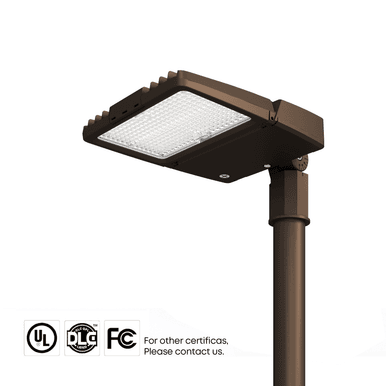
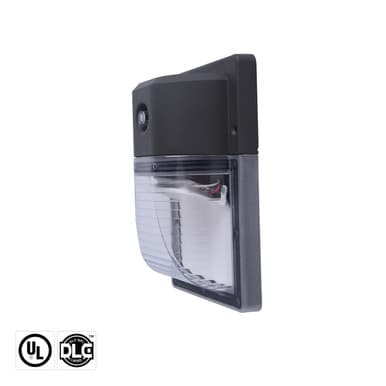
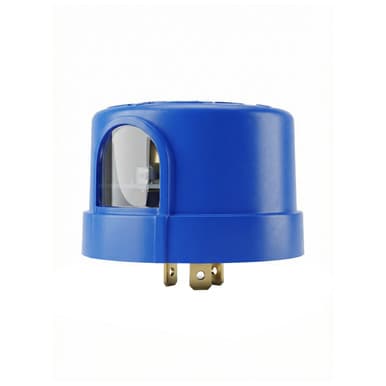
Recommended Products for Apartment Parking
Dark sky compliant, low-trespass LED area lights for multi-family residential communities


LED vs Traditional: Energy Savings Comparison
Replacing 175W metal halide fixtures (210W actual) with 75W LED area lights
Actual wattage
Annual energy (11hr/day)
Annual cost ($0.12/kWh)
Lamp life
Maintenance (5-year)
20-fixture apartment annual savings
Adding 50% overnight dimming after midnight (when residents are asleep) can double energy savings again with zero impact on resident safety.
Case Study
200-Unit Apartment Complex LED Retrofit — Denver, CO
A 200-unit garden apartment community in Denver replaced 28 × 175W metal halide fixtures with PLB Series 75W LED area lights and 12 wall pack units. 3000K warm white was specified to comply with Denver's dark sky ordinance. After installation, the property manager reported zero light complaint calls from neighbors — a significant improvement from the prior 6–8 annual complaints. Photocell controls added 50% after-midnight dimming.
$8,400
Annual Energy Savings
Zero
Neighbor Complaints
64%
Energy Reduction
Ready to upgrade your apartment parking lighting?
Get a free dark sky compliant photometric layout and energy savings analysis for your residential community.