Airport Lighting
Design Guide
IES RP-37 & FAA-compliant LED lighting for terminals, parking, aprons, and roadways
50–70%
Energy Savings
FAA
CFR Part 139 Compliant
Free
Photometric Design
Select Your Airport Zone
Jump to lighting requirements and product recommendations for each area
Terminal Curbside & Drop-off
High-traffic passenger areas with security requirements
Short & Long-Term Parking
Multi-level garages and surface lots
Airport Access Roads
Highway-grade roadway lighting
Maintenance & Cargo Areas
Industrial-grade lighting for 24/7 operations
Ground Transportation
Bus staging, ride-share, rental car areas
Security Perimeter
Fencing, restricted zones, critical infrastructure
IES RP-37 / FAA Illuminance Standards
Recommended foot-candle levels for airport outdoor environments
Terminal curbside (vehicle)
High pedestrian + vehicle activity
Terminal curbside (pedestrian)
ADA accessibility required
Short-term parking (surface)
Enhanced security
Long-term parking (surface)
Economy areas
Parking garage
Higher for covered structures
Access roads
IES RP-8 roadway standard
Cargo/maintenance apron
24/7 industrial operations
Ground transportation staging
Bus/shuttle/rideshare
Security perimeter
Fence line, restricted areas
Source: IES RP-37 (Airport Outdoor Environments), FAA AC 150/5340-30J, IES RP-20 (Parking). Always verify with local AHJ.
⚠️FAA CFR Part 139 §139.311: All airport lighting must be shielded to prevent interference with air traffic control and aircraft operations. Full cutoff fixtures are mandatory. All Auvolar area lights feature full cutoff optics.
Pole Height, Spacing & Wattage Selection Guide
Match mounting height to application requirements across all airport zones
15–20 ft
20–25 ft
25–30 ft
30–40 ft
FAA Compliance Requirements
Mandatory lighting requirements for FAA Part 139 certificated airports
Full cutoff mandatory
Zero light above 90° (§139.311)
All Auvolar area lights comply ✅
No uplight
Prevents pilot glare during approach/taxi
BUG U0 rating required
Shielded fixtures only
No exposed lamp / refractor hazard
Full housing required
BUG Rating
IES TM-15 backlight, uplight, glare
U0 minimum — verified by IES LM-79
Color temperature
4000K–5000K typical
No dark sky CCT restriction in airport zones
Emergency backup
Critical area lighting continuity
Battery backup or dual-feed required
Lighting Solutions by Airport Zone
Design parameters, example configurations, and recommended products for each area
✈️ Terminal Curbside & Drop-off
The busiest zone at any airport — passengers, taxis, rideshares, and luggage all converge here. High-CRI lighting (≥70) is essential for security camera effectiveness and passenger safety. ADA compliance requires 2.0 fc minimum at all pedestrian pathways without dark spots.
Design Parameters
| Target illuminance | 5.0 fc avg (vehicle) / 3.0–5.0 fc (pedestrian) |
| Min illuminance | 1.0 fc |
| Uniformity | 3:1 (avg:min) |
| Pole height | 20–25 ft |
| CCT | 4000K–5000K |
| Controls | Photocell (continuous overnight) |
Example Configuration
Recommended Products


🅿️ Short & Long-Term Parking Structures
Airport parking combines the challenges of standard parking lots with elevated security requirements. Short-term lots near the terminal need 2.0–5.0 fc for enhanced security, while long-term economy lots can operate at 1.0–2.0 fc. Multi-level garages require canopy-style fixtures with 5.0–10.0 fc to accommodate covered structures.
Design Parameters
| Short-term surface | 2.0–5.0 fc (enhanced security) |
| Long-term surface | 1.0–2.0 fc |
| Parking garage | 5.0–10.0 fc |
| Pole height | 20–25 ft (surface), canopy (garage) |
| CCT | 5000K (security-optimized) |
| Controls | Photocell + overnight dimming |
Example Configuration
Recommended Products

🛣️ Airport Access Roads & Internal Roadways
Airport roads handle heavy vehicular traffic at all hours. Access roads connecting to highway systems follow IES RP-8 roadway standards. Internal airport roads serving terminals, cargo, and rental car facilities need uniform, glare-controlled illumination with no driver distraction.
Design Parameters
| Target illuminance | 0.6–1.2 fc avg |
| Min illuminance | 0.2 fc |
| Uniformity | 3:1 (IES RP-8) |
| Pole height | 25–30 ft |
| Distribution | Type III (roadway throw) |
| CCT | 4000K–5000K |
Example Configuration
Recommended Products

🔧 Cargo & Maintenance Apron Areas
Cargo aprons and maintenance facilities demand the highest illuminance at airports — 10–20 fc for 24/7 industrial operations. Workers operating ground service equipment, loading cargo, and performing aircraft maintenance need consistent, high-lumen coverage at higher pole heights. IP66 rated fixtures are mandatory for weather exposure.
Design Parameters
| Target illuminance | 10.0–20.0 fc avg |
| Min illuminance | 5.0 fc |
| Uniformity | 3:1 |
| Pole height | 30–40 ft |
| CCT | 5000K (task visibility) |
| Operating hours | 24/7 continuous |
Example Configuration
Recommended Products

🚌 Ground Transportation Hub
Bus staging, ride-share zones, and rental car return areas see constant vehicle and pedestrian movement. These zones need 3.0–5.0 fc for safe navigation, clear signage visibility, and effective security camera coverage. Wall packs supplement pole lighting at canopies and kiosk areas.
Design Parameters
| Target illuminance | 3.0–5.0 fc avg |
| Min illuminance | 1.0 fc |
| Uniformity | 4:1 |
| Pole height | 20–25 ft |
| CCT | 4000K–5000K |
| Controls | Photocell + timer |
Example Configuration
Recommended Products

👮 Security Perimeter Fencing
Airport security perimeters are critical infrastructure requiring uninterrupted illumination along fence lines and restricted zones. Lighting must maintain 1.0–2.0 fc along the full perimeter with no dark gaps that could mask intrusion. Photocell control ensures dusk-to-dawn operation with no manual override required.
Design Parameters
| Target illuminance | 1.0–2.0 fc avg |
| Min illuminance | 0.5 fc |
| Uniformity | 3:1 |
| Pole height | 15–20 ft |
| Spacing | 40–60 ft along fence line |
| Controls | Photocell (dusk-to-dawn, no dimming) |
Example Configuration
Recommended Products
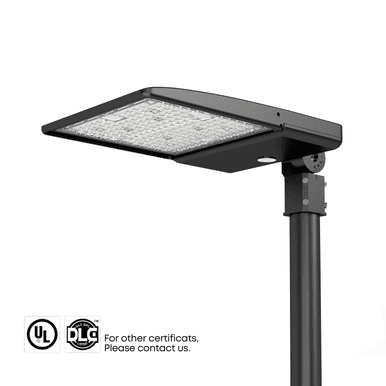
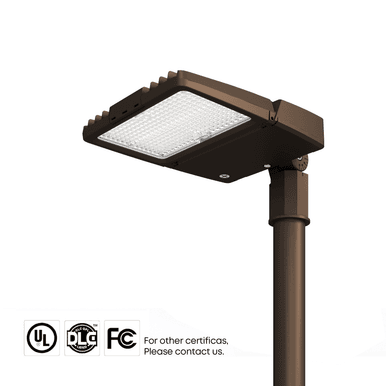
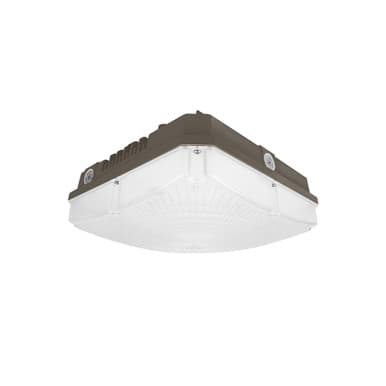
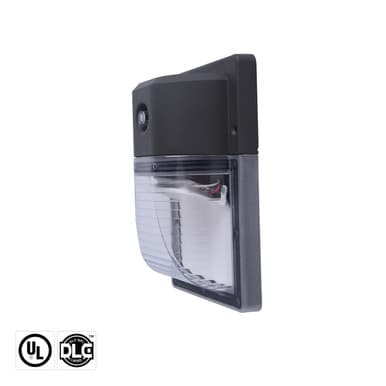
Recommended Products for Airport Lighting
FAA full cutoff compliant, DLC Premium certified, IP65–IP66 rated area lights and accessories

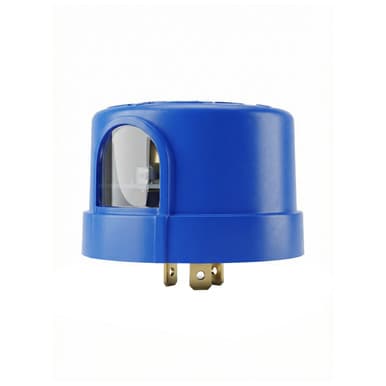
LED vs Traditional: Energy Savings Comparison
Replacing 400W metal halide fixtures (458W actual) with 150W LED area lights
Actual wattage
Annual energy (14hr/day)
Annual cost ($0.12/kWh)
Lamp life
Maintenance (5-year)
50-fixture airport savings
FAA/DOT AIP grants can cover 60–90% of LED retrofit costs at Part 139 airports, often reducing payback to under 1 year.
Case Study
Regional Airport LED Retrofit — Parking & Terminal Curbside
A 4-gate regional airport replaced 120 × 400W metal halide area lights across terminal curbside, short-term parking, and access roads with OT02 150W–200W LED fixtures. FAA full cutoff compliance was achieved, energy consumption dropped 66%, and maintenance crew eliminated 3 annual lamp replacement events.
$27,000
Annual Energy Savings
2.1 yr
Payback Period
66%
Energy Reduction
Ready to upgrade your airport lighting?
Get a free photometric layout, FAA compliance review, and energy savings analysis for your project.