Healthcare & Hospital
Parking Lighting Guide
24/7 safety-critical LED lighting for hospitals, medical centers, and healthcare parking facilities
67%
Energy Savings
24/7
Continuous Operation
Free
Photometric Design
IES RP-20 Healthcare Parking Illuminance Standards
Recommended foot-candle levels for hospital and medical facility parking — 24/7 operation
General hospital parking (enhanced security)
24/7 operation — no dimming in active zones
Main hospital entrance / ER drop-off
Highest priority area for patient safety
Pedestrian crosswalks & pathways
Patient/visitor access corridors
ADA accessible spaces
Strict ADA federal requirement
Emergency vehicle access lanes
Ambulance / fire access corridors
Employee parking (shift changes)
Night shift safety priority
Parking garage (hospital)
Higher than standard — patient safety
Source: IES RP-20 (Lighting for Parking Facilities), NFPA 101, Joint Commission Standards. Always verify with local AHJ and facility compliance officer.
🚑24/7 Operation Required: Hospital parking lots must not use overnight dimming in patient-accessible areas. LED's 100,000-hour lifespan means virtually zero maintenance interruptions — critical when every lamp failure requires immediate response.
Pole Height, Spacing & Wattage Selection Guide
Healthcare parking requires higher illuminance targets — select wattage accordingly
15–20 ft
20–25 ft
25–30 ft
30–35 ft
Light Distribution: Type III vs Type V for Healthcare
Hospital environments require careful optical control to prevent patient room light intrusion
Type III — Building-Adjacent Poles
Asymmetric throw directed away from the hospital building — prevents light intrusion into patient rooms and ICU windows.
Type V — Interior Lot Islands
Symmetric 360° spread for interior parking fields, crosswalk poles, and walkways surrounded by parking on all sides.
Compliance & Special Requirements
Key regulatory requirements for healthcare parking lighting
IES RP-20 Enhanced Security
2.0–5.0 fc avg, 3:1 uniformity — 24/7 operation
No overnight dimming in patient-accessible areas
ADA Title II & III
Minimum 2.0 fc, zero dark spots at all accessible spaces
Federal requirement — violation risk is significant
NFPA 101 Life Safety Code
Emergency lighting requirements for egress paths
Battery backup required at designated egress routes
Joint Commission Standards
Environmental safety for patient and visitor areas
Lighting failure requires immediate response protocol
HIPAA / Privacy
Adequate lighting at parking payment and badge reader areas
Prevents shoulder-surfing at kiosks
Full cutoff optics
Zero light above 90° to prevent glare on patients/drivers
All Auvolar area lights comply ✅
Lighting Solutions by Healthcare Scenario
Design parameters, example configurations, and recommended products for each healthcare parking application
🏥 Main Hospital Parking Structure
Hospital parking garages serve patients, visitors, and staff around the clock. Shift changes at 6 AM, 2 PM, and 10 PM create three daily peaks where parking lot traffic spikes dramatically. IES RP-20 requires 5.0–10.0 fc average in hospital garages — significantly higher than standard commercial garages — because patients may be in wheelchairs, on crutches, or disoriented. No overnight dimming is acceptable in patient-accessible zones.
Design Parameters
| Target illuminance | 5.0–10.0 fc (hospital garage) |
| Min illuminance | 2.0 fc |
| Uniformity | 5:1 or better |
| Fixture type | Canopy / surface mount |
| Operating hours | 24/7 — no dimming allowed |
| Controls | Photocell at entrance only |
Example Configuration
Recommended Products


🏢 Outpatient / Medical Office Parking
Outpatient centers typically operate 7 AM–8 PM with a lower-security evening requirement. However, elderly patients and mobility-impaired visitors need consistent 2.0–3.0 fc with very high uniformity to avoid trip-and-fall hazards. ADA accessible spaces must have a strict minimum of 2.0 fc with no exceptions. After-hours 50% dimming can be applied when the facility is closed.
Design Parameters
| Target illuminance | 2.0–3.0 fc avg |
| ADA minimum | 2.0 fc — no dark spots |
| Uniformity | 3:1 or better |
| Pole height | 20–25 ft |
| CCT | 4000K (comfortable, neutral) |
| Controls | Photocell + after-hours 50% dim |
Example Configuration
Recommended Products

🚑 Emergency Department Entrance & Drop-off
The emergency entrance is the most critical lighting zone at any hospital. Ambulances, personal vehicles, and helicopters converge here at all hours. NFPA 101 requires emergency egress lighting with battery backup at all designated egress paths. The ED drop-off needs 5.0 fc minimum for staff to assess incoming patients and ensure safe vehicle clearance. No light interruption is tolerable.
Design Parameters
| Target illuminance | 5.0 fc minimum (emergency zone) |
| Min illuminance | 2.0 fc |
| Uniformity | 3:1 |
| Operating hours | 24/7 continuous — no dimming |
| Emergency backup | Battery-backed egress lighting required |
| Canopy / overhang | Wall packs + canopy fixtures under cover |
Example Configuration
Recommended Products

👩⚕️ Staff & Employee Parking
Healthcare employees — nurses, physicians, technicians — often work overnight shifts and arrive/depart in complete darkness. Staff parking lots at hospitals have higher crime risk than general commercial lots due to valuable personal items and predictable schedules. 2.0 fc average with high uniformity and good perimeter coverage is standard. Photocell controls are appropriate since staff lots are used around the clock.
Design Parameters
| Target illuminance | 2.0 fc avg |
| Min illuminance | 0.5 fc |
| Uniformity | 4:1 |
| Pole height | 20–25 ft |
| CCT | 5000K (security-optimized) |
| Controls | Photocell (dusk-to-dawn, no dimming) |
Example Configuration
Recommended Products

🏗️ Medical Office Building (MOB) Campus
Multi-building medical office campuses share central parking fields. Different buildings have different hours — primary care closes at 5 PM while urgent care operates until 10 PM. A zoned lighting control approach allows energy savings in closed-building zones while maintaining full coverage for active areas. ASHRAE 90.1 controls apply to new MOB construction.
Design Parameters
| Target illuminance | 1.5–3.0 fc (varies by zone) |
| Active zone | 3.0 fc during business hours |
| After-hours zone | 1.0 fc (50% dim when building closed) |
| Pole height | 20–25 ft |
| CCT | 4000K |
| Controls | Multi-zone photocell + timer per building |
Example Configuration
Recommended Products
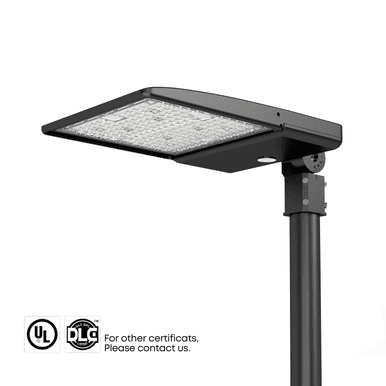
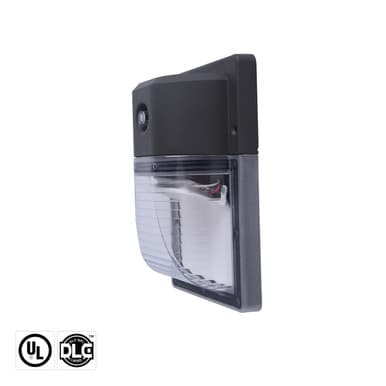
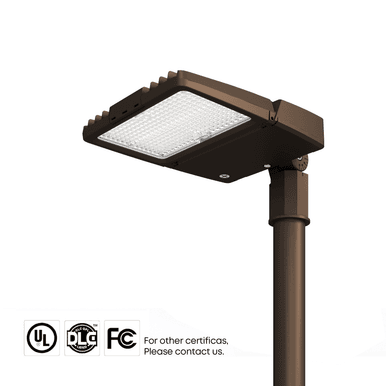
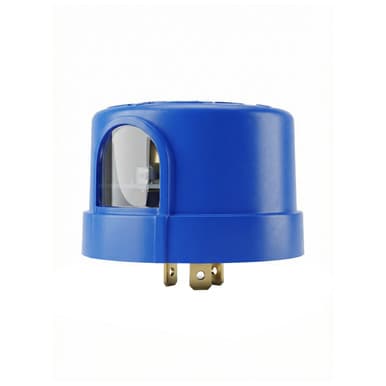
Recommended Products for Healthcare Parking
24/7 rated, DLC Premium certified, IP65–IP66 area lights for hospitals and medical facilities


LED vs Traditional: Energy Savings Comparison
Replacing 400W metal halide fixtures with 150W LED — calculated for 24/7 hospital operation
Actual wattage
Annual energy (24hr/day)
Annual cost ($0.12/kWh)
Lamp life
Maintenance (5-year)
80-fixture hospital annual savings
24/7 operation amplifies savings vs standard commercial lots. LED's 100,000-hour life eliminates annual lamp replacements — typically $80–$150/fixture for MH.
Case Study
Regional Hospital LED Retrofit — Atlanta, GA
A 700-bed regional hospital in Atlanta retrofitted 120 × 400W metal halide fixtures across their 800-space surface lots and parking garage with OT02 150W–200W LED area lights and Canopy IDA fixtures. 24/7 operation was maintained throughout installation. ADA accessible spaces were upgraded first. The facilities team eliminated 3 annual lamp replacement events. Utility rebates of $70/fixture offset $8,400 of project cost.
$24,000
Annual Energy Savings
2.2 yr
Payback Period
67%
Energy Reduction
Ready to upgrade your healthcare parking lighting?
Get a free photometric layout, IES RP-20 compliance review, and energy savings analysis for your hospital or medical campus.