LED Security Lighting Guide
CPTED & IES RP-33 Solutions
Complete design guide for commercial security lighting — from CPTED principles and IES standards to fixture selection for perimeters, parking lots, and critical infrastructure
85%
Energy Savings vs HID
150+
lm/W Efficacy
100K+
Hour Rated Life
IES RP-33 & CPTED Security Illuminance Standards
Recommended foot-candle levels by zone per IES RP-33, IES G-1, and CPTED guidelines
Perimeter Fencing
CPTED: eliminate shadow zones along fence lines
Parking Lots (Open)
IES RP-20 parking facility guidelines
Parking Structures
Higher for ramps, stairwells, elevators
Building Entries/Exits
Transition zone — facial recognition critical
Walkways & Pathways
Even coverage prevents trip hazards
Stairwells (Exterior)
ADA and IBC egress requirements
Loading/Service Areas
Camera-compatible lighting for CCTV
ATMs/Cash Handling
State laws may require ≥10 fc at ATMs
Critical Infrastructure
Substations, water treatment, data centers
Source: IES RP-33-14, IES G-1-16, CPTED Through Environmental Design. Verify with local AHJ — some jurisdictions have stricter requirements for parking and ATM areas.
💡Uniformity is more important than brightness. CPTED research shows that even illumination with 4:1 uniformity is more effective at deterring crime than bright spots with dark gaps. A uniformly lit 2 fc parking lot is safer than one with 10 fc hotspots and 0.1 fc shadows between poles.
Security Fixture Selection Guide
Match the security zone to the right fixture type, wattage, and mounting
Building Perimeter Walls
Entries, corridors, dock faces
Parking Lots
Lots, driveways, streets ⭐
Perimeter & Fencing
Fence lines, yards, fields
Walkways & Pathways
Pedestrian paths, plazas
Doorways & Exits
Emergency exits, side entries
Compliance & Code Requirements
Key regulations for security and exterior lighting design
IES RP-33-14
Lighting for Exterior Environments
Primary design reference
CPTED Principles
Crime Prevention Through Environmental Design
Natural surveillance & territoriality
IES G-1-16
Guideline for Security Lighting for People, Property, and Critical Infrastructure
Security-specific illuminance
IES RP-20-14
Lighting for Parking Facilities
Parking lot/structure standards
IDA Dark Sky
Full cutoff, 3000K max, uplight limited
Required in many municipalities
ASHRAE 90.1-2022
Exterior LPD limits + controls
Energy code for new construction
ADA / IBC
Accessible egress route illumination
1 fc minimum on path of travel
NEC / NFPA 70
UL listed, wet location rated
Electrical safety for outdoor use
⚠️Light trespass liability: Over-lighting or poorly aimed fixtures can create glare that blinds drivers and pedestrians, creating liability. Use full cutoff fixtures with proper aiming to keep light on your property. Many municipalities now enforce light trespass ordinances with fines.
Security Lighting Solutions by Zone
Design parameters, example configurations, and recommended products for each security application
🔒 Perimeter Fencing & Boundary Security
Perimeter security lighting must eliminate shadow zones along fence lines that intruders can exploit. The challenge is covering long, linear distances cost-effectively while maintaining uniform illumination. Traditional HID perimeter lights create harsh bright spots with dark gaps between fixtures, actually helping intruders time movements between pools of light. LED flood lights with adjustable aiming and photocell controls provide continuous coverage at a fraction of the energy cost.
Design Parameters
| Target illuminance | 1–5 fc |
| Min illuminance | 0.5 fc |
| Uniformity | 10:1 (avg:min) |
| Mounting height | 15–25 ft |
| CCT | 4000K–5000K |
| Controls | Photocell dusk-to-dawn + motion boost |
Example Configuration
Recommended Products


🅿️ Parking Lots & Structures
Parking lots are the #1 location for property crimes in commercial settings. Poor lighting creates concealment opportunities, reduces natural surveillance, and makes CCTV footage unusable. IES RP-20 requires minimum 0.5 fc with 4:1 uniformity for open lots, but security best practices recommend 1–5 fc. Pole-mounted area lights with Type III or IV distributions maximize coverage per fixture while minimizing light trespass onto adjacent properties.
Design Parameters
| Target illuminance | 1–5 fc |
| Min illuminance | 0.5 fc |
| Uniformity | 4:1 (avg:min) |
| Mounting height | 20–35 ft |
| CCT | 4000K (camera-optimized) |
| Controls | Photocell + adaptive dimming (50% midnight–5AM) |
Example Configuration
Recommended Products


🏢 Building Exterior & Entries
Building entries are critical transition zones where occupants move between bright interiors and dark exteriors. CPTED principles require sufficient illumination for facial recognition at 25 feet — the distance needed to identify an approaching person. Wall packs at entries, security lights at side doors, and bollards along approach paths create layered security. The "1:4 rule" states entry lighting should be at least 25% of interior lobby luminance to prevent dangerous adaptation delays.
Design Parameters
| Target illuminance | 5–10 fc |
| Min illuminance | 3 fc |
| Uniformity | 3:1 (avg:min) |
| Mounting height | 8–15 ft (wall mount) |
| CCT | 3000K–4000K |
| Controls | Photocell + occupancy boost at side entries |
Example Configuration
Recommended Products

🚶 Stairwells & Walkways
Exterior stairwells and walkways are high-risk areas combining fall hazards with security vulnerabilities. ADA requires minimum 1 fc on accessible routes; IBC requires egress illumination. Stairwells need higher levels (5–10 fc) with uniform coverage on treads and risers. Wall-mounted fixtures at 8–10ft intervals on alternating sides eliminate shadows on stair treads. Vandal-resistant polycarbonate lenses are critical — standard glass fixtures are frequently broken in parking structures and exterior stairwells.
Design Parameters
| Target illuminance | 5–10 fc (stairs) / 1–2 fc (walkways) |
| Min illuminance | 2 fc (stairs) / 0.5 fc (walkways) |
| Uniformity | 3:1 (avg:min) |
| Mounting height | 8–10 ft (wall) |
| CCT | 4000K |
| Controls | Always-on with photocell / Motion-boost in low-traffic |
Example Configuration
Recommended Products
⚡ Critical Infrastructure & Facilities
Critical infrastructure facilities — electrical substations, water treatment plants, data centers, government buildings — face elevated threat levels requiring enhanced security lighting. DHS/CISA guidelines recommend 5–20 fc at controlled perimeters with zero dark spots. Camera-compatible 4000K lighting ensures color-accurate CCTV recording. Emergency backup power for security lighting is often mandated. High-wattage pole-mounted area lights with flood light supplements provide the redundant coverage these facilities demand.
Design Parameters
| Target illuminance | 5–20 fc |
| Min illuminance | 2 fc |
| Uniformity | 3:1 (avg:min) |
| Mounting height | 25–40 ft |
| CCT | 4000K (CCTV optimized) |
| Controls | 24/7 on + emergency generator backup |
Example Configuration
Recommended Products

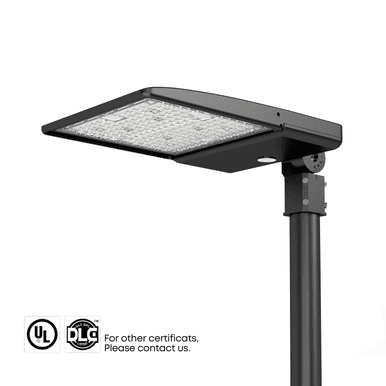
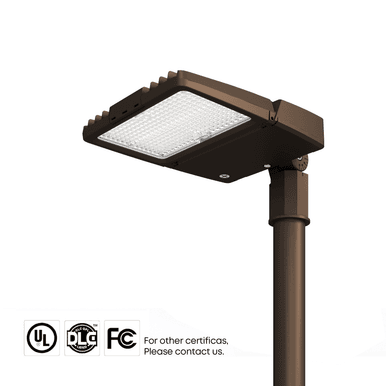
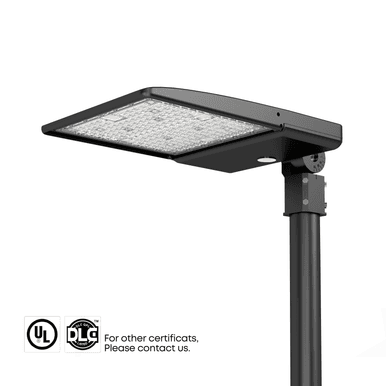
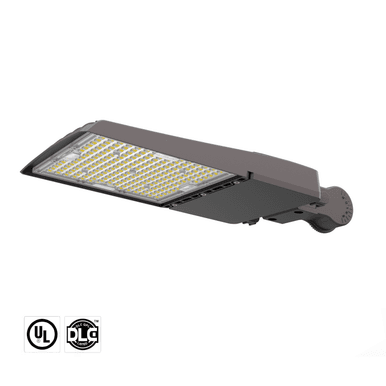
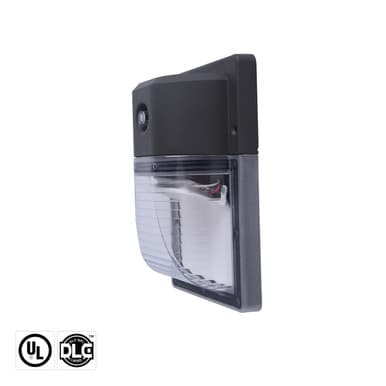
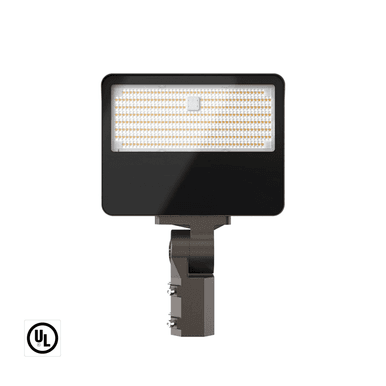
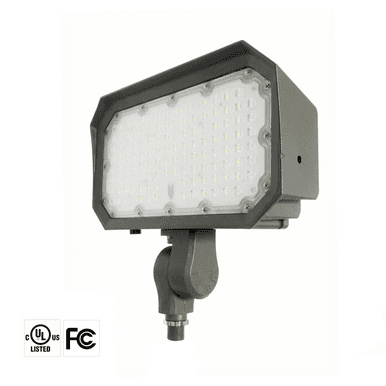
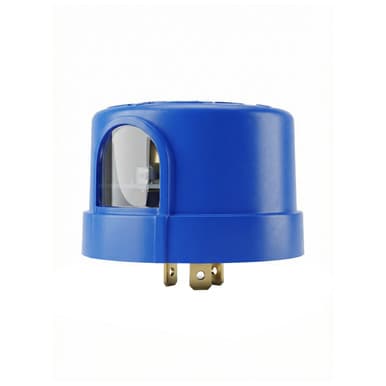
Recommended Products for Security Lighting
DLC certified area lights, wall packs, flood lights, and security fixtures for commercial properties
LED vs HID: Security Lighting Energy Savings
Based on $0.12/kWh, 4,380 hrs/year (12 hrs/day dusk-to-dawn average)
400W Metal Halide Wall Pack
250W HPS Flood Light
1000W Metal Halide Area Light
175W Mercury Vapor Wall Pack
150W HPS Bollard
Security lighting runs dusk-to-dawn (avg 12 hrs/day). Adding adaptive dimming (50% midnight–5AM) can save an additional 20–30%. Photocells ensure lights operate only when needed.
Case Study
Corporate Campus — Irvine, CA
Replaced 85 × 1000W metal halide parking lot fixtures and 120 × 175W mercury vapor wall packs with Auvolar OT Series 300W area lights and A-WP 80W wall packs. Added photocells and adaptive midnight dimming. Energy reduced 78%. Security camera footage quality improved dramatically at 4000K — facial recognition distance increased from 15ft to 40ft. Insurance carrier reduced premises liability premium by 12% after lighting upgrade documented.
$68,000
Annual Energy Savings
18 mo
Payback (after DLC rebates)
78%
Energy Reduction
Ready to upgrade your security lighting?
Get a free security lighting design, IES RP-33 compliance review, and energy savings analysis for your property.