LED Office Lighting Guide
IES RP-1-22 Troffer & Panel Solutions
Complete design guide for offices, conference rooms, and commercial workspaces — from IES RP-1-22 standards and ASHRAE 90.1 LPD compliance to fixture selection
60%
Energy Savings vs Fluorescent
130+
lm/W Efficacy
UGR<19
Glare Control
IES RP-1-22 Office Illuminance Standards
Recommended foot-candle levels by office zone per IES RP-1-22 and ASHRAE 90.1
Open Office (general)
IES RP-1-22 horizontal task plane; UGR<19 for VDT work
Private / Executive Office
Supplemental task lighting recommended
Conference / Meeting Room
Dimmable for AV presentations; 0-10V required
Lobby / Reception
Accent lighting for branding & wayfinding
Break Room / Kitchen
Higher CRI preferred for food areas
Corridors & Hallways
Occupancy sensor dimming recommended
Restrooms
Vacancy sensor required by code
Copy / Print Room
Even coverage for reading printed material
Server / IT Room
Vertical illuminance on rack faces critical
Source: IES RP-1-22 (Office Lighting), ASHRAE 90.1-2022. Always verify with local AHJ — municipal codes may impose stricter requirements.
💡UGR matters for computer work. IES RP-1-22 mandates UGR<19 for workstations with Visual Display Terminals (VDTs). High-UGR fixtures cause screen glare, eye fatigue, and neck strain as workers adjust posture to avoid reflections. All Auvolar office fixtures are designed with low-glare optics meeting UGR<19.
Ceiling Type & Fixture Selection Guide
Match your ceiling type to the right office fixture, wattage, and layout
2×4 Drop Ceiling
Open office, general areas ⭐
2×2 Drop Ceiling
Private offices, small rooms
Hard / Drywall Ceiling
Modern offices, renovations
Open / Exposed Ceiling
Break rooms, corridors, utility
Accent Areas
Lobbies, reception, hallways
ASHRAE 90.1 LPD Compliance Guide
Lighting Power Density limits and how LED fixtures easily comply
LPD Limits by Space
ASHRAE 90.1-2022 Space-by-Space method maximum Lighting Power Density:
LED vs Fluorescent LPD
Auvolar LED fixtures achieve significantly lower LPD than fluorescent while delivering equal or better illuminance:
Open office with 40W LED troffers
Actual LPD: 40W ÷ 64 ft² = 0.63 W/ft² ✅ (limit: 0.71)
Same space with 3-lamp T8 fluorescent
Actual LPD: 96W ÷ 64 ft² = 1.50 W/ft² ❌ (exceeds limit)
Corridor with 30W LED wraparound
Actual LPD: 30W ÷ 80 ft² = 0.38 W/ft² ✅ (limit: 0.41)
Compliance & Code Requirements
Key regulations for office and commercial workspace lighting design
IES RP-1-22
Office lighting recommended practice — illuminance, uniformity, glare
Industry benchmark for design
ASHRAE 90.1-2022
LPD max 0.71 W/ft² (open office), 0.93 W/ft² (enclosed office)
Energy code for new construction
California Title 24
Occupancy sensors + daylight harvesting + dimming mandatory
Required for CA offices
IECC 2021
Automatic shut-off, daylight responsive controls
International energy code
DLC / DLC Premium
Utility rebate eligibility for troffers & panels
$15–$50/fixture rebate potential
ADA Compliance
Emergency egress lighting min 1 fc along exit path
Federal requirement
WELL Building Standard
Circadian lighting, melanopic ratios, glare control
Voluntary wellness certification
UL 1598 / UL 2108
Luminaire safety listing, LED retrofit standards
Electrical safety standard
⚠️Title 24 in California: All offices in California must have automatic daylighting controls within 15 ft of windows, vacancy sensors in enclosed spaces ≤250 ft², and 0-10V dimming capability. Non-compliant installations will fail inspection.
Lighting Solutions by Office Space Type
Design parameters, example configurations, and recommended products for each office zone
🏢 Open Office / Workstation Areas
Open offices are the largest single zone in most commercial buildings, with dozens to hundreds of workstations where employees spend 8+ hours daily on computer screens. Glare on monitors causes eye strain, headaches, and reduced productivity — studies show a 15% productivity drop when UGR exceeds 22. The challenge is delivering 30–50 fc of uniform light across large floor plates while maintaining UGR<19 at every workstation angle, meeting ASHRAE 90.1 LPD limits of 0.71 W/ft², and providing occupancy-based dimming for energy savings.
Design Parameters
| Target illuminance | 30–50 fc |
| Min illuminance | 30 fc |
| Uniformity | 3:1 (avg:min) |
| UGR | <19 (VDT work) |
| CCT | 4000K (neutral white) |
| Controls | Occupancy sensor + daylight harvesting |
Example Configuration
Recommended Products


🪑 Private / Executive Offices
Private offices serve C-suite executives and senior staff who spend long hours in video calls and document review. The lighting must balance professionalism with comfort — too bright creates harsh video call backgrounds, too dim causes eye fatigue on printed documents. CCT-tunable fixtures allow occupants to shift from 4000K for daytime focus to 3000K for late-afternoon calm, supporting circadian health and personal preference. Dimming is essential for video conferencing where ambient light competes with screen visibility.
Design Parameters
| Target illuminance | 30–50 fc |
| Min illuminance | 30 fc |
| Uniformity | 3:1 (avg:min) |
| UGR | <19 |
| CCT | 3000K–5000K (tunable) |
| Controls | 0-10V dimming + personal control |
Example Configuration
Recommended Products


📊 Conference & Meeting Rooms
Conference rooms serve multiple purposes — presentations requiring dim ambient light, whiteboard sessions requiring bright task light, and video calls requiring even facial illumination. A single fixed lighting level fails all three scenarios. Dimmable fixtures with scene presets solve this: "Presentation" dims to 10 fc, "Meeting" provides 40 fc, and "Video Call" delivers 30 fc with emphasis on vertical facial illuminance. The key specification is 0-10V dimming capability with smooth transition — no visible stepping or flicker at low dim levels.
Design Parameters
| Target illuminance | 30–50 fc (meeting), 10 fc (AV) |
| Min illuminance | 20 fc |
| Uniformity | 3:1 (avg:min) |
| CCT | 3500K–4000K |
| Dimming | 0-10V, 10–100% range |
| Controls | Scene presets + vacancy sensor |
Example Configuration
Recommended Products
🏛️ Lobby & Reception Areas
The lobby creates the first impression for clients, visitors, and prospective employees. Lighting here must balance architectural aesthetics with wayfinding clarity. Recessed downlights provide focused accent illumination on reception desks, artwork, and brand walls, while ambient troffers or panels maintain comfortable overall brightness. The vertical-to-horizontal illuminance ratio matters — faces should be well-lit for security cameras and social interaction. CCT at 3000K–3500K creates a warm, welcoming atmosphere distinct from the cooler task-oriented office floors above.
Design Parameters
| Target illuminance | 10–30 fc (ambient) |
| Accent lighting | 50–100 fc on feature walls |
| Uniformity | 4:1 (avg:min) |
| CCT | 3000K–3500K (warm) |
| CRI | ≥90 recommended |
| Controls | Dimming scenes + daylight response |
Example Configuration
Recommended Products
☕ Break Room & Kitchen
Break rooms and office kitchens require brighter, higher-CRI lighting than standard office areas. Food preparation demands CRI ≥80 (ideally 90+) so employees can see food colors accurately — important for food safety and appetite appeal. The kitchen area within a break room needs 50 fc at countertop level, while the dining/seating area can be lower at 30 fc for a more relaxed atmosphere. LED wraparounds and strip lights provide excellent coverage over countertops and sinks, while troffers handle the general seating area. Fixtures should be easy to clean — sealed or smooth lens designs prevent grease accumulation.
Design Parameters
| Target illuminance | 30–50 fc |
| Min illuminance | 20 fc |
| Uniformity | 3:1 (avg:min) |
| CCT | 3500K–4000K |
| CRI | ≥80 (≥90 at food prep) |
| Controls | Occupancy sensor + manual switch |
Example Configuration
Recommended Products


Recommended Products for Office Lighting
DLC certified troffers, panels, downlights, and accessories for commercial offices

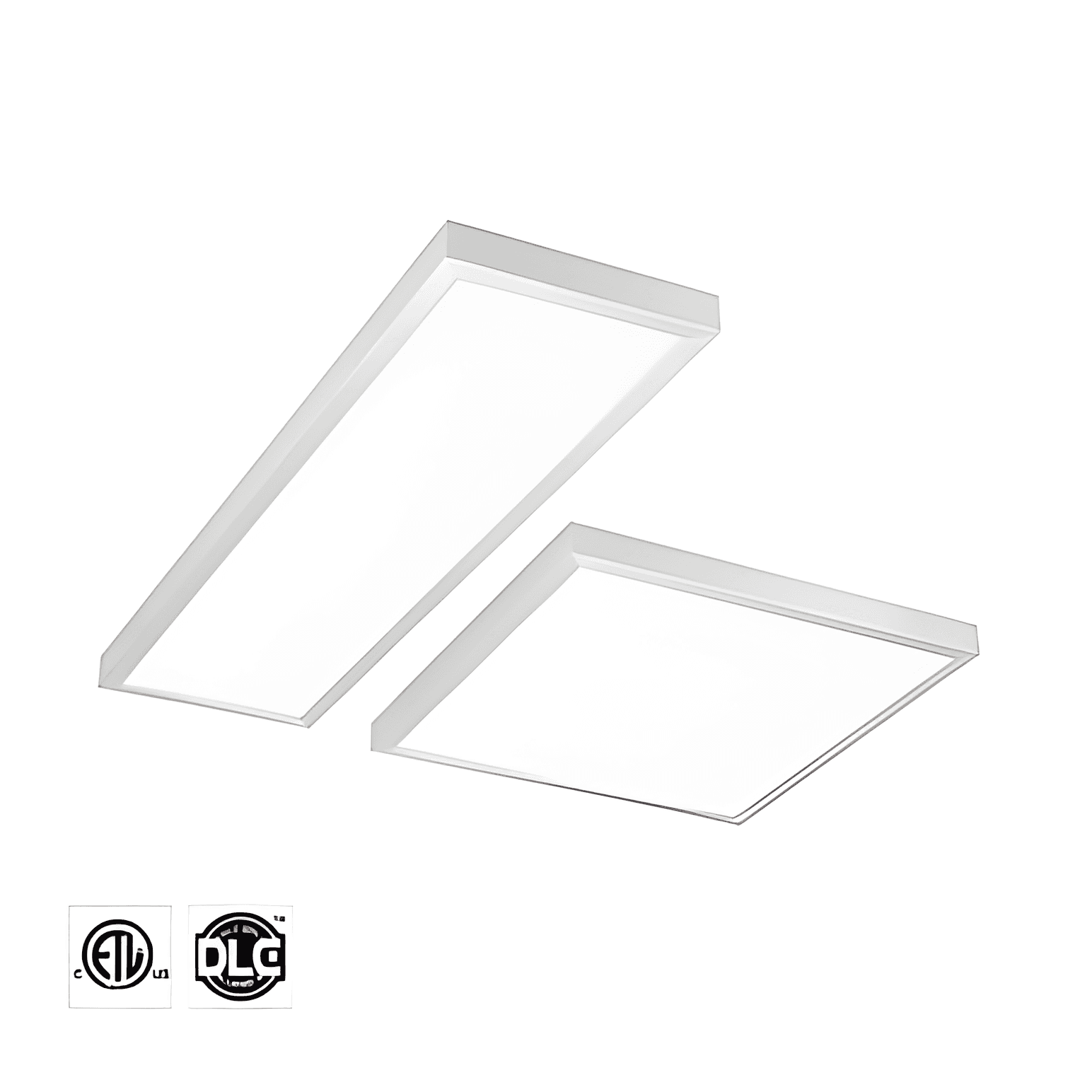


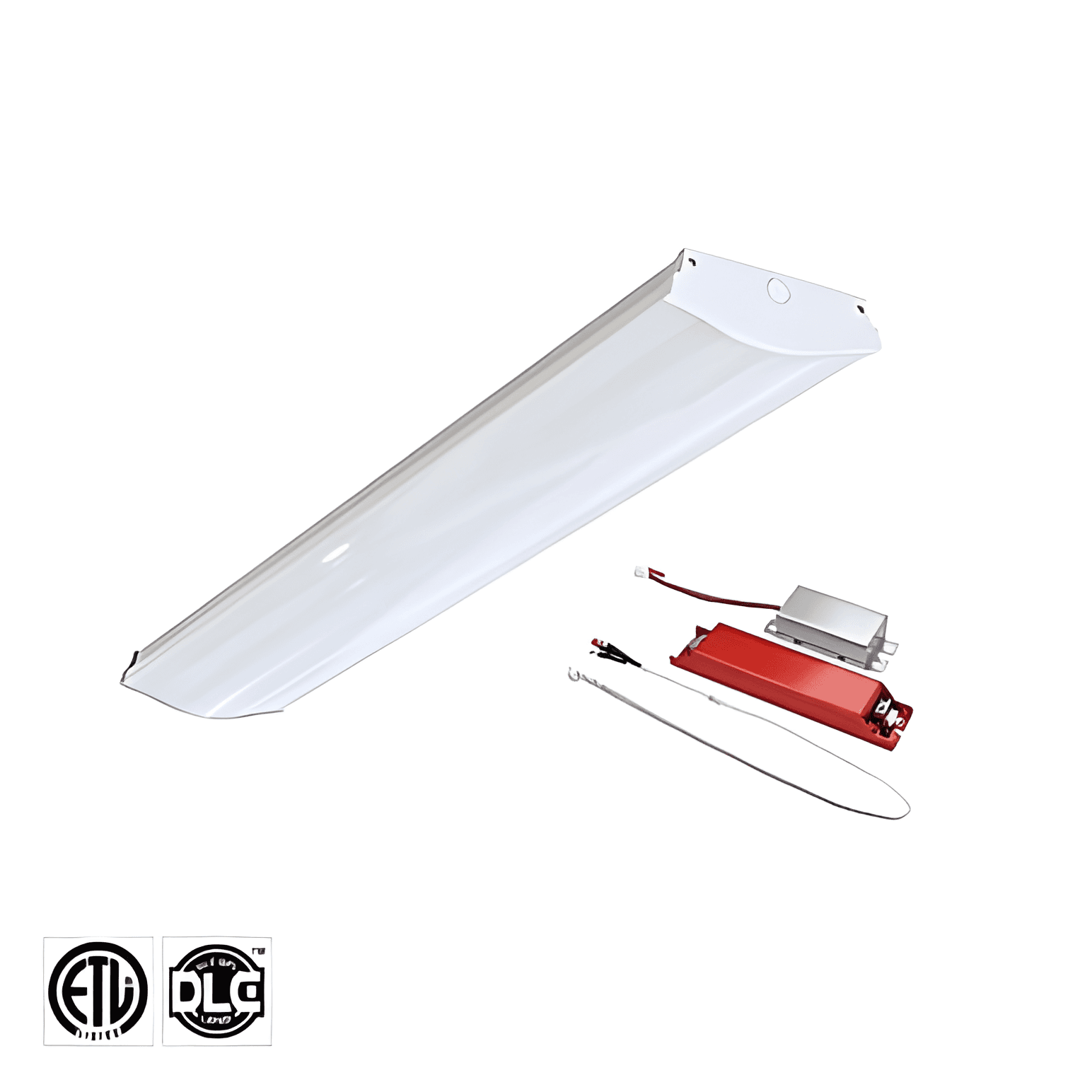
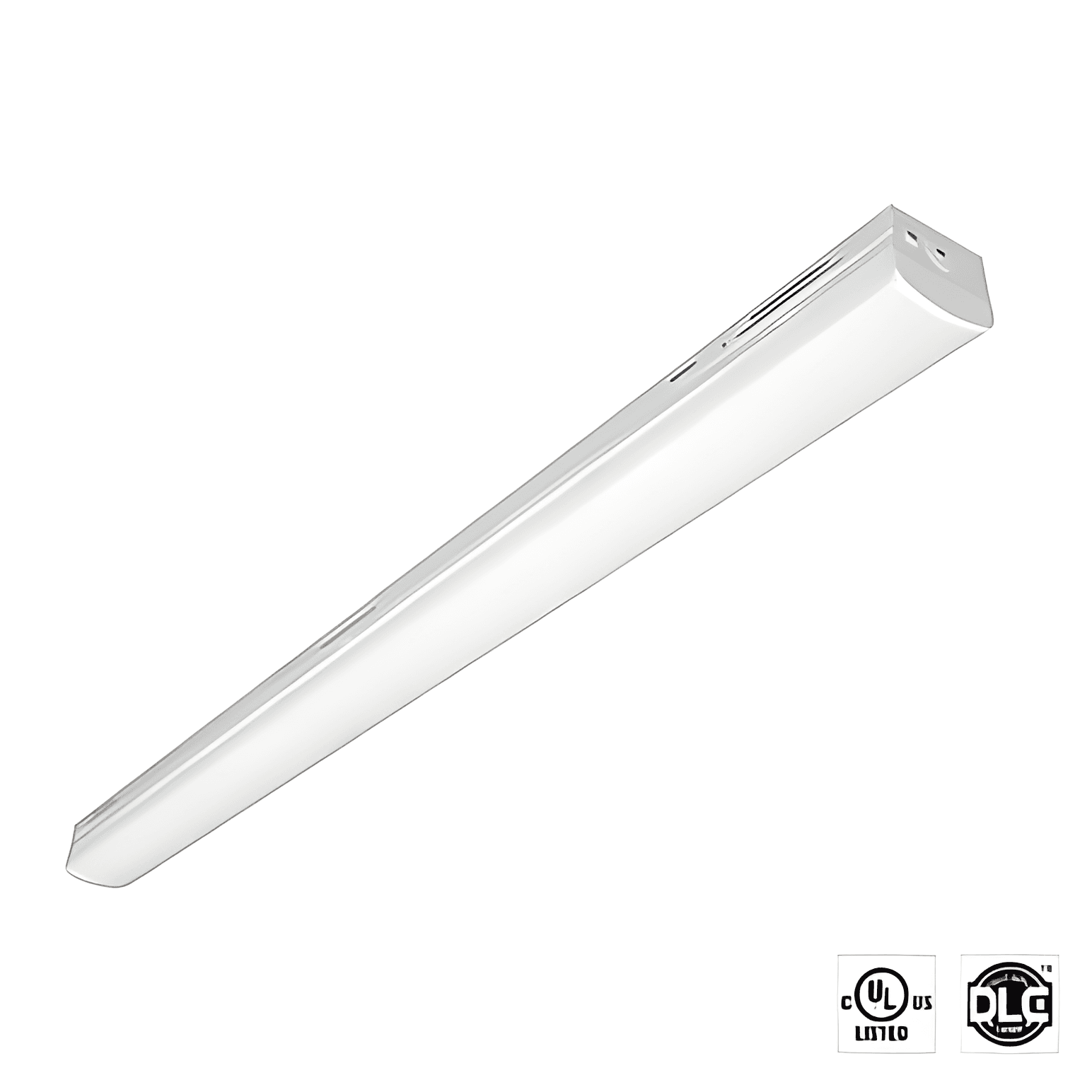
LED vs Fluorescent: Office Energy Savings Comparison
Based on $0.12/kWh, 3,120 hrs/year (12 hrs/day × 260 workdays)
3-Lamp T8 Fluorescent Troffer
2-Lamp T8 Fluorescent Troffer
4-Lamp T8 Fluorescent 2×4
CFL Downlight 26W
2-Lamp T8 4ft Strip
Add occupancy sensors for 30–50% additional savings in private offices, conference rooms, and break rooms. DLC certification qualifies for utility rebates of $15–$50 per fixture.
Case Study
85,000 sq ft Class A Office Tower — Irvine, CA
Replaced 1,250 × 3-lamp T8 fluorescent troffers with Auvolar 40W LED Troffers (AN-TF24). ASHRAE 90.1 LPD reduced from 1.2 W/ft² to 0.63 W/ft². Daylight harvesting controls installed on perimeter 3 floors. SCE DLC rebates of $25/fixture covered 35% of material cost. Tenant satisfaction surveys showed 89% approval of improved lighting quality and reduced glare on screens.
$38,000
Annual Energy Savings
18 mo
Payback (after DLC rebates)
58%
Energy Reduction
Ready to upgrade your office lighting?
Get a free lighting design, IES RP-1-22 compliance review, and energy savings analysis for your office or commercial workspace.