LED Healthcare Lighting Guide
IES RP-29 Hospital Solutions
Complete design guide for hospitals, clinics, and medical facilities — from IES RP-29-16 standards to tunable white patient room solutions
90+
CRI for Clinical Spaces
65%
Energy Savings vs Fluorescent
50K+
Hour Rated Life
IES RP-29-16 Healthcare Illuminance Standards
Recommended foot-candle levels by healthcare space type per IES RP-29-16 and FGI Guidelines
Patient Room (General)
Tunable white 2700K–5000K for circadian support
Patient Room (Examination)
CRI ≥ 90 required for accurate skin assessment
Operating / Surgical Suite
Supplement with surgical task light 5,000+ fc
Emergency Department
Instant-on, high CRI for trauma assessment
Corridors & Nurse Stations
Nighttime dimming to 5 fc for patient sleep
Waiting Areas
Warm CCT (3000K–3500K) for patient comfort
Pharmacy / Laboratory
CRI ≥ 90, flicker-free for precision tasks
ICU / Critical Care
Dimmable with nighttime low-level mode
Radiology / Imaging
Low ambient to preserve dark adaptation
Source: IES RP-29-16 (Lighting for Hospitals and Healthcare Facilities), FGI Guidelines for Design and Construction of Hospitals 2022. Always verify with local AHJ and accreditation body requirements.
💡Circadian lighting is evidence-based. Multiple peer-reviewed studies show that dynamic lighting synchronized to circadian rhythms (blue-enriched 5000K daytime, warm 2700K evening) improves patient outcomes — shorter hospital stays, better sleep quality, lower pain medication use, and higher HCAHPS satisfaction scores.
Healthcare Fixture Selection Guide
Match healthcare space type to the right fixture, CCT, and CRI
Patient Rooms
Indirect recessed, dimmable
Surgical Suites
Sealed, cleanroom compatible ⭐
Corridors
Night-dimming capable, motion sensor
Emergency Dept
High-output, instant-on, CRI critical
Waiting Areas
Warm, inviting ambiance
Compliance & Regulatory Requirements
Key regulations and standards for healthcare facility lighting design
IES RP-29-16
Lighting for hospitals and healthcare facilities recommended practice
Primary design standard
FGI Guidelines 2022
Facility Guidelines Institute — minimum lighting levels by space type
Required for accreditation
ASHRAE 170
Ventilation and environmental control; lighting heat load affects HVAC
Impacts fixture selection
NFPA 101 Life Safety
Emergency egress lighting ≥ 1 fc along path of travel
Code-mandated
ASHRAE 90.1-2022
Lighting power density limits for healthcare occupancies
Energy code compliance
UL 1598 / UL 2108
Fixture safety listing; low-voltage LED driver compliance
Electrical safety
ADA / Title III
Adequate lighting for persons with visual impairments
Accessibility requirement
Joint Commission Standards
Environment of Care standards for lighting adequacy
Accreditation standard
⚠️Joint Commission compliance: Inadequate lighting is a common Environment of Care citation. Ensure all patient care areas meet IES RP-29-16 minimums and document lighting levels during commissioning for accreditation surveys.
Lighting Solutions by Healthcare Space
Design parameters, example configurations, and recommended products for each healthcare application
🛏️ Patient Rooms
Patient rooms must balance clinical task lighting for examinations with restful, circadian-supportive ambient lighting for recovery. Studies show that exposure to blue-enriched light (5000K) during daytime hours and warm dimmed light (2700K) at night can reduce hospital stays by up to 1.5 days. Fixed-CCT fixtures force a compromise that satisfies neither need — staff cannot assess skin color accurately under warm light, while patients cannot sleep under cool white overhead fixtures.
Design Parameters
| Target illuminance | 20–30 fc (ambient), 50–75 fc (exam) |
| Min illuminance | 10 fc |
| Uniformity | 3:1 (avg:min) |
| CCT | 2700K–5000K tunable white |
| CRI | ≥ 90 (exam mode) |
| Controls | 0-10V dimming + CCT tuning |
Example Configuration
Recommended Products


🏥 Operating / Surgical Suites
Operating rooms demand the highest lighting quality in any building type. Ambient illumination must be shadow-free and high-CRI for tissue differentiation, while surgical task lights provide 5,000–160,000 fc on the operative field. The ambient ceiling fixtures must be sealed for cleanroom compatibility (ISO Class 7–8), withstand chemical disinfection, and produce zero flicker that could cause visual fatigue during multi-hour procedures. Color temperature consistency across fixtures is critical — even a 100K shift between adjacent panels is noticeable under surgical magnification.
Design Parameters
| Target illuminance (ambient) | 75–150 fc |
| Min illuminance | 50 fc |
| Uniformity | 2:1 (avg:min) |
| CCT | 4000K–5000K fixed |
| CRI | ≥ 90 (R9 ≥ 50 for red rendering) |
| Fixture rating | IP54+, sealed gasket, cleanable |
Example Configuration
Recommended Products


🚑 Emergency Departments
Emergency departments operate 24/7 under high stress with critical need for immediate, accurate visual assessment. Trauma bays require 100+ fc with CRI ≥ 90 so clinicians can assess cyanosis, jaundice, and hemorrhage by skin color. The challenge is achieving high illuminance while managing glare for patients lying supine — direct overhead light sources cause extreme discomfort for immobilized patients on stretchers. Triage areas need different lighting than resuscitation bays, requiring flexible zoning within an open floor plan.
Design Parameters
| Target illuminance | 50–100 fc (trauma: 100+ fc) |
| Min illuminance | 30 fc |
| Uniformity | 2:1 (avg:min) |
| CCT | 4000K–5000K |
| CRI | ≥ 90 |
| Controls | Zone dimming, instant-on capability |
Example Configuration
Recommended Products

👩⚕️ Corridors & Nurse Stations
Hospital corridors serve dual functions: clinical pathways for staff pushing equipment and IV poles, and sleep-disrupting light sources for patient rooms with open doors. Nighttime light from corridors entering patient rooms is the #1 lighting complaint in patient satisfaction surveys (HCAHPS). Nurse stations require 30–50 fc for charting and medication verification, but adjacent corridor lighting should dim to 5 fc at night without creating tripping hazards. The 20:1 luminance ratio between a bright nurse station and a dimmed corridor creates dangerous adaptation issues.
Design Parameters
| Target illuminance (day) | 15–30 fc |
| Target illuminance (night) | 5–10 fc |
| Nurse station | 30–50 fc |
| Uniformity | 4:1 (avg:min) |
| CCT | 3500K day / 2700K night |
| Controls | Scheduled dimming + occupancy sensors |
Example Configuration
Recommended Products
🪑 Waiting Areas
Waiting areas set the first impression for patients and families who are already anxious. Cold, flickering fluorescent lighting amplifies stress, while warm, well-designed LED lighting has been shown to reduce perceived wait times by up to 20%. The challenge is creating a calming, residential-feel environment within a commercial healthcare building. Overhead glare must be minimized for patients who may be nauseous or photosensitive. Natural light integration through daylight harvesting controls can further improve the experience while reducing energy consumption.
Design Parameters
| Target illuminance | 20–30 fc |
| Min illuminance | 10 fc |
| Uniformity | 3:1 (avg:min) |
| CCT | 3000K–3500K (warm) |
| CRI | ≥ 80 |
| Controls | Daylight harvesting + 0-10V dimming |
Example Configuration
Recommended Products
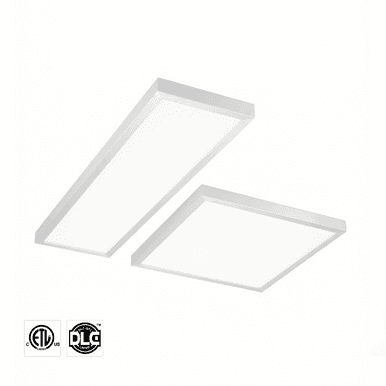
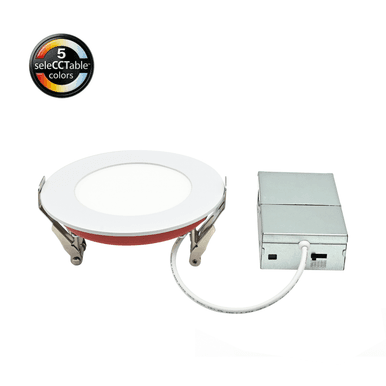
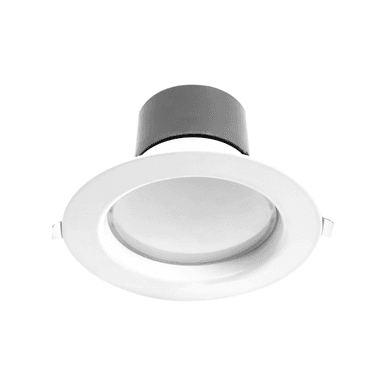
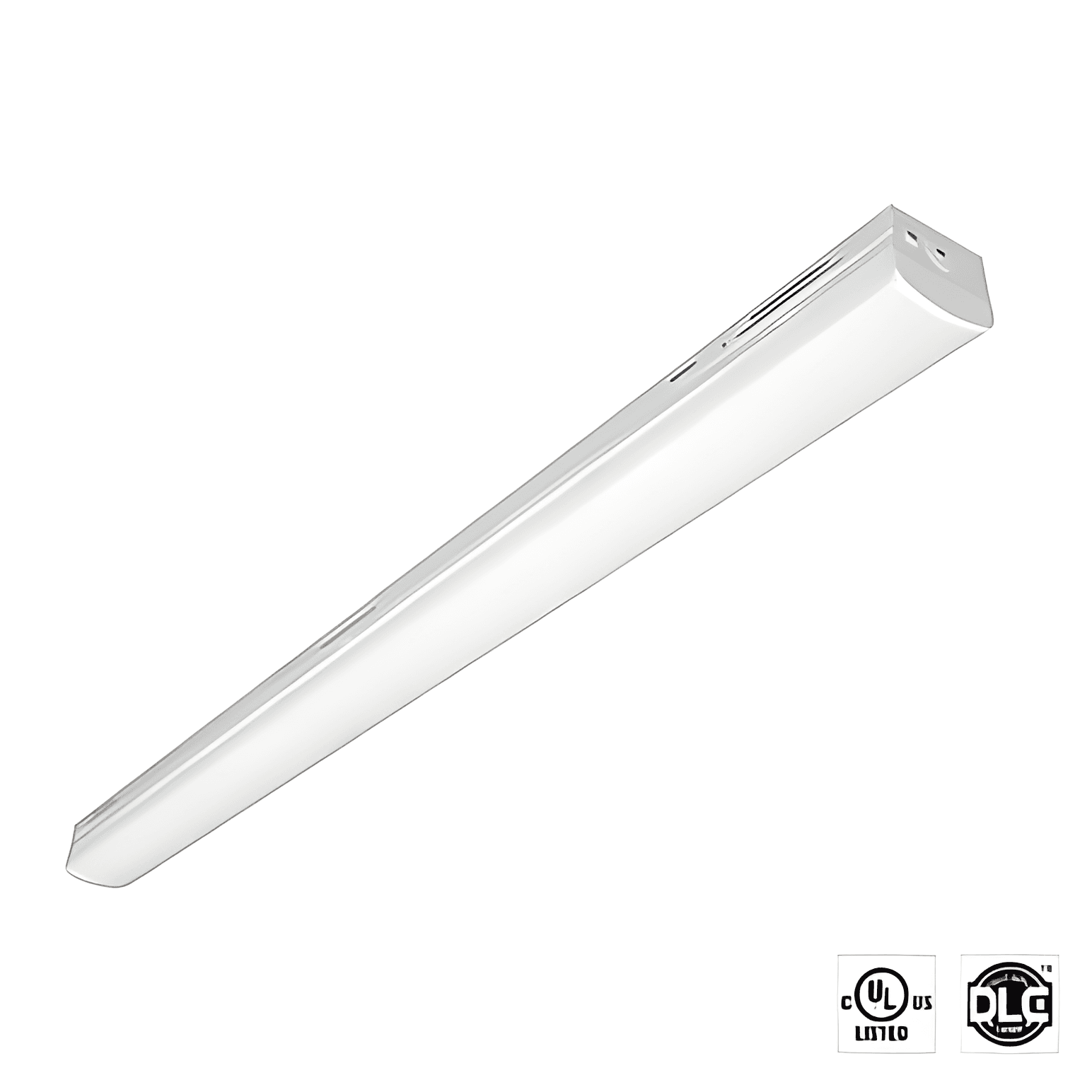
Recommended Products for Healthcare Lighting
High-CRI troffers, tunable panels, downlights, and LED tubes for hospitals and medical facilities

LED vs Fluorescent: Healthcare Energy Savings Comparison
Based on $0.12/kWh, 8,760 hrs/year (24/7 hospital operation)
2×4 Fluorescent Troffer (3×T8)
2×4 Fluorescent Troffer (4×T8)
CFL Downlight 26W
4ft T8 Fluorescent (2 lamp)
4ft T8 Wraparound (4 lamp)
Hospitals operate lighting 24/7 (8,760 hrs/year) — making LED upgrades among the fastest-payback capital investments. Additional savings from reduced HVAC load (LED produces 60–70% less heat) and eliminated re-lamping labor.
Case Study
175-Bed Community Hospital — Riverside, CA
Replaced 1,800 fluorescent troffers and 400 CFL downlights with Auvolar LED troffers (AN-TF24), tunable panels (A-SFPL), and CCT-tunable downlights (AN-DL). Patient rooms received tunable white panels programmed to circadian schedules. Post-retrofit HCAHPS scores for "quietness" and "environment" improved 12 points. Nursing staff reported reduced eye fatigue on night shifts with properly dimmed corridor lighting.
$87,000
Annual Energy Savings
18 mo
Payback (after utility rebates)
62%
Energy Reduction
Ready to upgrade your healthcare facility lighting?
Get a free photometric layout, IES RP-29 compliance review, and energy savings analysis for your hospital or medical facility.