LED Gas Station & Canopy Lighting
API 2003 & IES RP-33 Solutions
Complete lighting design guide for fuel islands, canopies, convenience stores, car wash bays, and perimeter parking — from API 2003 standards to fixture selection
78%
Canopy Energy Savings
150+
lm/W Efficacy
100K+
Hour Rated Life
Gas Station Illuminance Standards
Recommended foot-candle levels by zone per IES RP-33 and API 2003 canopy standards
Fuel Island (Under Canopy)
API 2003 minimum for safe fueling operations
Canopy Drive Lane
Transition zone between canopy and lot
Convenience Store Interior
Retail-level illuminance for merchandise display
Car Wash Bay
IP66 fixtures required; high humidity environment
Perimeter Parking Lot
IES RP-33 exterior parking standard
Drive-Through Lane
Menu board area may need 30+ fc
Dumpster / Service Area
Security lighting for rear of facility
Signage / Brand Identity
Vertical illuminance on sign face
Source: IES RP-33 (Lighting for Exterior Environments), API 2003, NFPA 30A. Always verify with local AHJ — municipal codes may impose stricter requirements.
💡Brightness attracts customers. Studies show that gas stations with 30+ fc canopy lighting attract 20–30% more nighttime customers than dimly lit competitors. The canopy is your biggest advertising asset — keep it bright, uniform, and inviting.
Fixture Selection Guide by Location
Match each gas station zone to the right fixture type, wattage, and spacing
Canopy (Recessed)
Fuel islands, pump area ⭐
Canopy (Surface)
Retrofit existing canopies
Building Perimeter
Convenience store walls, entries
Parking Lot Poles
Perimeter lot, drive areas
Compliance & Code Requirements
Key regulations for gas station and fuel dispensing facility lighting design
API 2003
Protection against ignitions from static, lightning & stray currents at fuel dispensing
Petroleum industry standard
IES RP-33
Recommended practice for exterior environments including gas stations
Industry design benchmark
NFPA 30A
Motor fuel dispensing facilities and repair garages
Fire code for fuel stations
NEC Article 514
Electrical installations in motor fuel dispensing facilities
Class I, Division 1/2 zone compliance
UL 844 / UL 1598
Fixture listing for hazardous or ordinary locations
Required for canopy fixtures
Dark Sky / IES TM-15
Light trespass and BUG rating limits for outdoor fixtures
Municipal ordinance — varies by jurisdiction
DLC / DLC Premium
Utility rebate eligibility for LED canopy and area lights
$20–$80/fixture rebate potential
ASHRAE 90.1-2022
Exterior lighting power allowance for commercial facilities
Energy code for new construction
⚠️NEC Article 514 classified areas: Lighting fixtures within the classified zone around fuel dispensers (20″ above grade, 18″ horizontal) must be rated for Class I, Division 1 or 2 locations. Canopy-mounted fixtures at 12–16 ft are typically outside the classified zone but require UL 1598 wet-location listing.
Lighting Solutions by Gas Station Zone
Design parameters, example configurations, and recommended products for each station area
⛽ Canopy & Fuel Islands
The canopy is the most visible element of any fuel station — it is essentially a billboard operating 24/7. Bright, uniform lighting under the canopy attracts customers from the road, signals a safe and well-maintained facility, and enables drivers to read pump displays, insert payment cards, and handle nozzles safely. Dark spots between pump islands create trip hazards and security blind spots. Legacy 400W metal halide canopy fixtures consume enormous energy, suffer from lumen depreciation, and require 15-minute restrike after power interruptions — a critical failure mode at a 24/7 facility.
Design Parameters
| Target illuminance | 30–50 fc (horizontal) |
| Min illuminance | 20 fc |
| Uniformity | 4:1 (avg:min) |
| Mounting height | 12–16 ft (canopy soffit) |
| CCT | 5000K (daylight white) |
| IP rating | IP65 minimum |
Example Configuration
Recommended Products


🏪 Convenience Store
The convenience store generates 30–40% of a gas station's total revenue, making proper interior lighting a direct profit driver. High-CRI lighting makes food, beverages, and merchandise look appealing, increasing impulse purchases. Exterior wall-mounted fixtures at entries create a welcoming storefront while maintaining CCTV camera image quality for security. The transition from the bright canopy (30–50 fc) to the store interior must feel seamless — a poorly lit entrance creates a perception of an unsafe or low-quality establishment.
Design Parameters
| Target illuminance | 50–75 fc (retail floor) |
| Min illuminance | 30 fc |
| Uniformity | 3:1 (avg:min) |
| CCT | 4000K–5000K |
| CRI | ≥ 80 (90+ for food display) |
| Controls | Photocell exterior + dimmer interior |
Example Configuration
Recommended Products

🚿 Car Wash Bays
Car wash environments combine the worst conditions for lighting: constant water spray, high-pressure detergent chemicals, steam, and high humidity. Standard fixtures fail within months — gaskets degrade, lenses fog, and electrical connections corrode. IP66-rated fixtures with chemical-resistant polycarbonate housings are mandatory. Bright, uniform lighting inside wash bays improves the customer experience (customers perceive a cleaner wash in a well-lit bay), enables staff to spot equipment issues, and supports security camera coverage inside enclosed tunnel washes.
Design Parameters
| Target illuminance | 30–50 fc |
| Min illuminance | 20 fc |
| Uniformity | 3:1 (avg:min) |
| IP rating | IP66 minimum (high-pressure wash) |
| CCT | 5000K |
| Housing | Chemical-resistant polycarbonate |
Example Configuration
Recommended Products
🅿️ Perimeter & Parking Area
Gas station parking areas serve dual purposes: customer convenience and security deterrence. Well-lit lots reduce crime, support license plate capture by security cameras, and minimize slip-and-fall liability. The challenge is providing adequate illumination (2–5 fc) across a large area while meeting Dark Sky ordinances that restrict uplight and light trespass onto neighboring properties. Pole-mounted area lights with Type III or Type V distributions maximize coverage per fixture while full-cutoff optics control spill light. Wall packs on the building perimeter fill gaps between pole coverage zones.
Design Parameters
| Target illuminance | 2–5 fc |
| Min illuminance | 1 fc |
| Uniformity | 4:1 (avg:min) |
| Pole height | 20–30 ft |
| CCT | 5000K |
| Optics | Type III perimeter / Type V interior |
Example Configuration
Recommended Products


🚗 Drive-Through
Many modern gas stations include QSR (quick-service restaurant) drive-throughs, adding complexity to the site lighting plan. The drive-through lane requires graduated illuminance: lower levels in the queue lane (5–10 fc), higher at the menu board (20–30 fc for readability), and bright at the pickup window (15–20 fc) for order verification and payment. Wall packs and canopy fixtures must be aimed to avoid glare into drivers' eyes while providing adequate illuminance on the ordering and pickup areas. The menu board itself typically requires dedicated accent lighting to ensure readability from 15–20 feet.
Design Parameters
| Target illuminance (lane) | 10–20 fc |
| Menu board area | 20–30 fc (vertical) |
| Pickup window | 15–20 fc |
| Uniformity | 4:1 |
| CCT | 4000K–5000K |
| Glare control | Full cutoff / shielded optics |
Example Configuration
Recommended Products
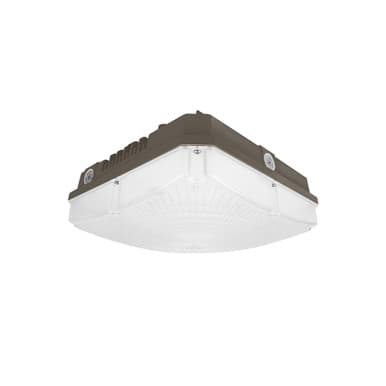
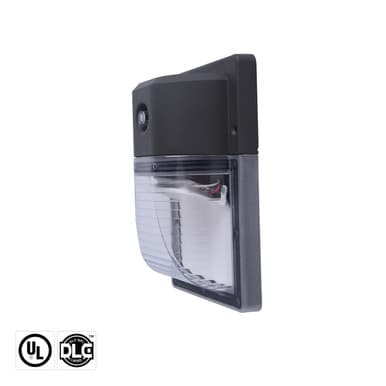
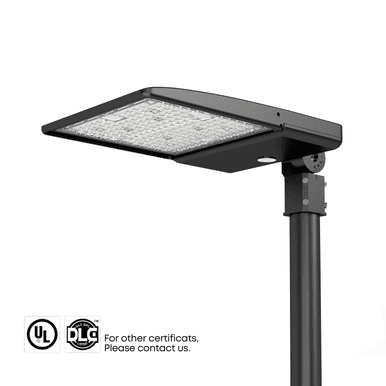
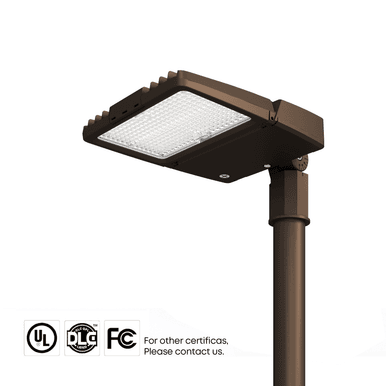
Recommended Products for Gas Station Lighting
DLC certified canopy lights, wall packs, and area lights for fuel stations, convenience stores, and car washes

LED vs Metal Halide: Gas Station Energy Savings
Based on $0.12/kWh, 8,760 hrs/year (24/7 operation)
400W Metal Halide Canopy
250W Metal Halide Canopy
175W Metal Halide Wall Pack
400W Metal Halide Shoebox
1000W Metal Halide Flood
Gas stations operate 24/7 (8,760 hrs/year), making LED savings significantly higher than typical commercial buildings. DLC certification qualifies for utility rebates of $20–$80 per fixture.
Case Study
8-Pump Gas Station & Convenience Store — Bakersfield, CA
Replaced 12 × 400W metal halide canopy fixtures with Auvolar 100W IDB Series LED canopy lights, plus 8 × 60W wall packs on the convenience store and 4 × 150W OT Series area lights for the parking lot. Total site energy reduced 74%. PG&E DLC rebates of $55/fixture covered 40% of material cost. Maintenance calls dropped to zero for 3+ years. Night-time customer traffic increased 18% within the first quarter after the upgrade.
$4,800
Annual Energy Savings
11 mo
Payback (after DLC rebates)
74%
Site Energy Reduction
Ready to upgrade your gas station lighting?
Get a free photometric layout, API 2003 compliance review, and energy savings analysis for your fuel station, canopy, and convenience store.