LED Agricultural Lighting Guide
Barns, Poultry & Greenhouse Solutions
Complete design guide for livestock barns, dairy parlors, poultry houses, greenhouses, and farm facilities — from ASABE standards to fixture selection
70%
Energy Savings vs HID
IP65
Dust/Ammonia Sealed
100K+
Hour Rated Life
ASABE & USDA Agricultural Illuminance Standards
Recommended foot-candle levels by agricultural area per ASABE EP344.4 and USDA guidelines
Livestock Barns (General)
ASABE EP344.4 — minimum for animal welfare and worker safety
Dairy Milking Parlor
Critical for udder health inspection, mastitis detection
Poultry House (Broiler)
USDA NOP — photoperiod control, dimmable 0–100%
Poultry House (Layer)
Light intensity affects egg production rate directly
Greenhouse / Nursery
Supplemental to daylight; photoperiod extension
Equipment Storage / Shops
Task lighting for equipment repair and maintenance
Feed Storage / Processing
OSHA requirements for material handling areas
Outdoor Yards / Loading
IES RP-33 for outdoor working areas
Source: ASABE EP344.4 (Lighting for Agricultural Facilities), USDA NOP §205.238, IES RP-33 (Exterior Environments). Verify with your state agricultural extension office for species-specific recommendations.
💡Light directly impacts animal productivity. Dairy cows under 16-hour photoperiods at 15+ fc produce 6–10% more milk. Layer hens under 14–16 hours of consistent light produce more eggs. Broiler growth rates improve with proper lighting programs. LED's precise dimming and consistent output make it the ideal technology for agricultural photoperiod management.
Fixture Selection Guide by Farm Area
Match each agricultural zone to the right fixture type, wattage, and IP rating
Livestock Barns
Ceiling/wall mount, ammonia-resistant
Milking Parlor
Bright task lighting over stalls ⭐
Poultry Houses
0-10V dimming for photoperiod control
Equipment Shops
High-ceiling shops, 15–25 ft mount
Outdoor Yards
Pole or building-mount perimeter
Compliance & Code Requirements
Key regulations for agricultural facility lighting design and installation
ASABE EP344.4
Lighting for agricultural buildings and facilities
Primary design standard for ag facilities
USDA NOP §205.238
National Organic Program — livestock living conditions including lighting
Required for organic certification
USDA Animal Welfare Act
Adequate lighting for animal health and inspection
Federal requirement for livestock facilities
OSHA General Duty Clause
Safe working conditions in agricultural workplaces
Employer obligation (10+ employees)
NEC Article 547
Agricultural buildings — special wiring methods, dust-tight fixtures
Electrical code for farm buildings
NFPA 150
Fire and life safety in animal housing facilities
Fire code for livestock structures
ASHRAE 90.1 (Ag Exempt)
Most agricultural buildings exempt from energy code
Verify local jurisdiction applicability
Dark Sky / Light Trespass
Rural exterior lighting — minimize impact on wildlife and neighbors
Increasingly required in rural zones
⚠️NEC Article 547 applies to all agricultural buildings. This requires dust-tight, moisture-resistant fixtures with corrosion-protected wiring methods. Standard indoor fixtures are not code-compliant in barns, poultry houses, or any agricultural building with livestock, hay, or grain storage.
Lighting Solutions by Agricultural Application
Design parameters, example configurations, and recommended products for each farm area
🐄 Livestock Barns & Dairy Facilities
Livestock barns combine dust, ammonia, moisture, and temperature extremes that destroy standard lighting fixtures within months. Dairy operations are especially demanding — milking parlors need 30–50 fc for mastitis detection and udder health inspection, while general barn areas need 10–20 fc for animal welfare and worker safety. Ammonia concentrations above 25 ppm corrode metals and degrade plastic housings, requiring IP65 sealed fixtures with ammonia-resistant materials. Studies show dairy cows exposed to 16–18 hours of 15+ fc lighting produce 6–10% more milk, making lighting a direct revenue driver.
Design Parameters
| Target illuminance | 10–20 fc (barn), 30–50 fc (parlor) |
| Min illuminance | 5 fc (barn), 20 fc (parlor) |
| Uniformity | 3:1 (parlor), 4:1 (barn) |
| Mounting | Ceiling, 10–16 ft |
| CCT | 5000K (mimics daylight) |
| IP rating | IP65 (dust/ammonia/moisture) |
Example Configuration
Recommended Products


🐔 Poultry Houses
Poultry lighting is arguably the most scientifically demanding agricultural lighting application. Light intensity, spectrum, and photoperiod directly control bird behavior, feed conversion, growth rate, and egg production. Broilers require graduated dimming programs from 20+ fc at chick placement to 0.5 fc at market weight, requiring fixtures with smooth 0-10V dimming down to 5% without flicker. Layer operations use 14–16 hour photoperiods at 1–5 fc to maximize egg production. Even 1 fc variation across the house causes uneven flock behavior and piling. Dust levels in poultry houses can exceed 10 mg/m³, requiring fully sealed IP65 fixtures.
Design Parameters
| Target illuminance | 0.5–5 fc (variable by program) |
| Min illuminance | 0.5 fc |
| Uniformity | 3:1 (avg:min) — critical |
| Mounting | Ceiling, 8–12 ft |
| CCT | 2700K–3000K (warm, reduces aggression) |
| Dimming | 0-10V, 0–100% smooth, flicker-free |
Example Configuration
Recommended Products
🌱 Greenhouses & Nurseries
Greenhouse supplemental lighting extends photoperiods during short winter days and compensates for cloud cover in northern latitudes. Unlike traditional HPS grow lights that operate at specific spectra, LED general-purpose lighting at 4000K–5000K provides broad-spectrum supplemental illumination suitable for a wide range of crops. The primary challenge is moisture — greenhouses maintain 60–90% relative humidity with regular misting, requiring IP65 sealed fixtures. Fixture placement must avoid shadowing from structural members, hanging baskets, and overhead irrigation lines. High ambient temperatures from solar gain can reach 110°F+ in summer, stressing fixture drivers.
Design Parameters
| Target illuminance | 20–50 fc (supplemental) |
| Min illuminance | 10 fc |
| Uniformity | 3:1 (avg:min) |
| Mounting | Truss-mount, 10–20 ft |
| CCT | 4000K–5000K (broad spectrum) |
| IP rating | IP65 (humidity/misting) |
Example Configuration
Recommended Products


🔧 Equipment Storage & Shops
Agricultural equipment shops house tractors, combines, and implements worth hundreds of thousands of dollars. Mechanics perform complex repairs on hydraulic systems, electrical harnesses, and engine components that require 30–50 fc of shadow-free task lighting. High ceilings (15–30 ft in pole barns) demand high-output fixtures, while large door openings create constant dust and moisture intrusion. Many farm shops double as welding areas and parts storage, requiring different lighting zones. IP65 rated fixtures prevent dust accumulation inside the housing — a critical fire safety factor in grain dust environments.
Design Parameters
| Target illuminance | 20–50 fc |
| Min illuminance | 10 fc |
| Uniformity | 4:1 (avg:min) |
| Mounting | Ceiling pendant/chain, 15–30 ft |
| CCT | 5000K |
| Controls | Occupancy sensor (energy savings) |
Example Configuration
Recommended Products
🌾 Outdoor Yards & Loading Areas
Agricultural outdoor areas include feed yards, cattle pens, loading chutes, grain handling areas, and driveways. These areas require dusk-to-dawn security lighting for livestock safety, predator deterrence, and worker visibility during early morning and late evening chores. Flood lights on building gables and pole-mounted area lights are the primary fixture types. Fixtures must withstand extreme weather — from sub-zero winter temperatures to 110°F+ summer heat, plus wind-driven rain, snow, and dust. Rural locations also require consideration for light trespass affecting neighboring properties and wildlife migration patterns.
Design Parameters
| Target illuminance | 5–15 fc |
| Min illuminance | 2 fc |
| Uniformity | 4:1 (avg:min) |
| Mounting | Pole 20–30 ft, gable 15–25 ft |
| CCT | 5000K |
| Controls | Photocell dusk-to-dawn |
Example Configuration
Recommended Products


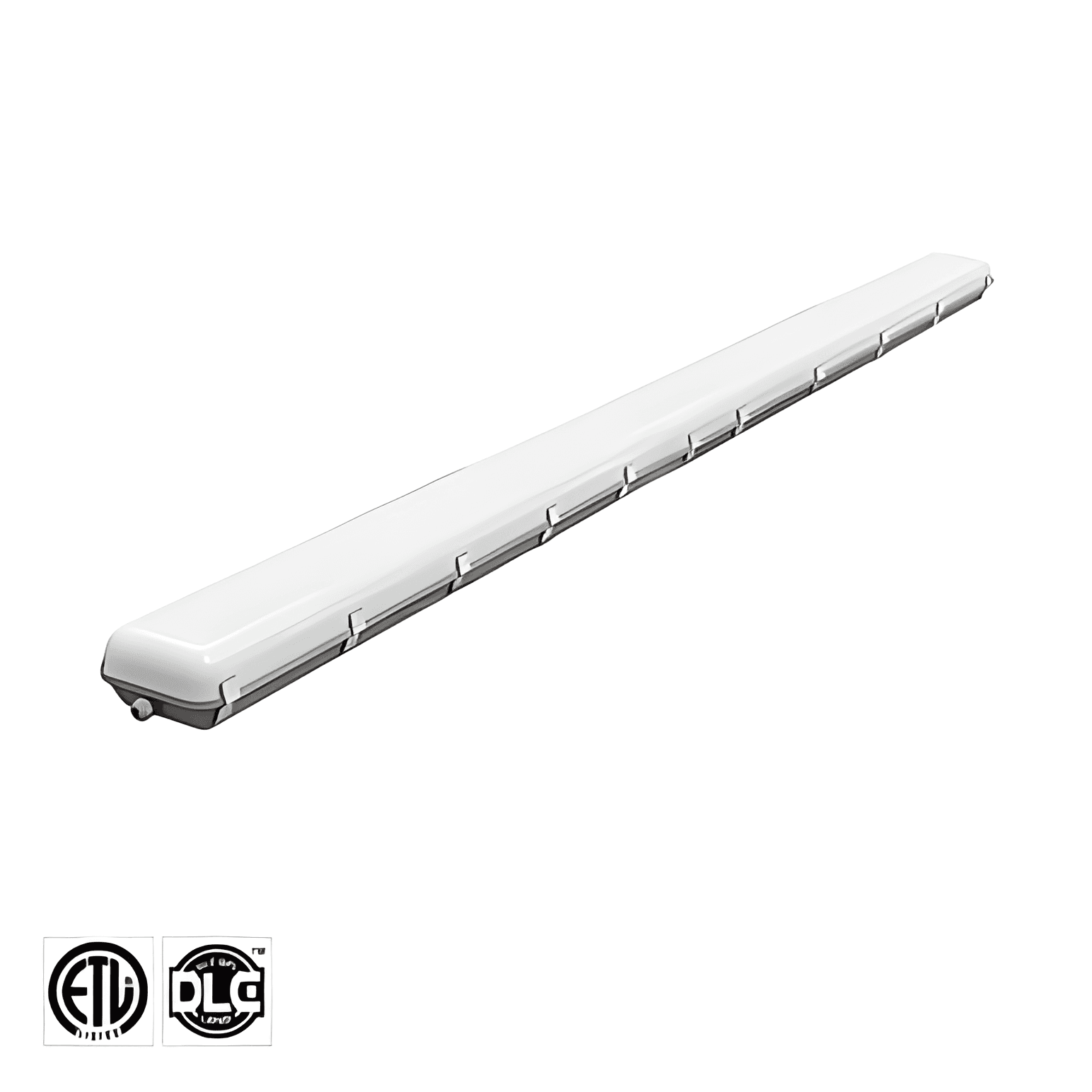
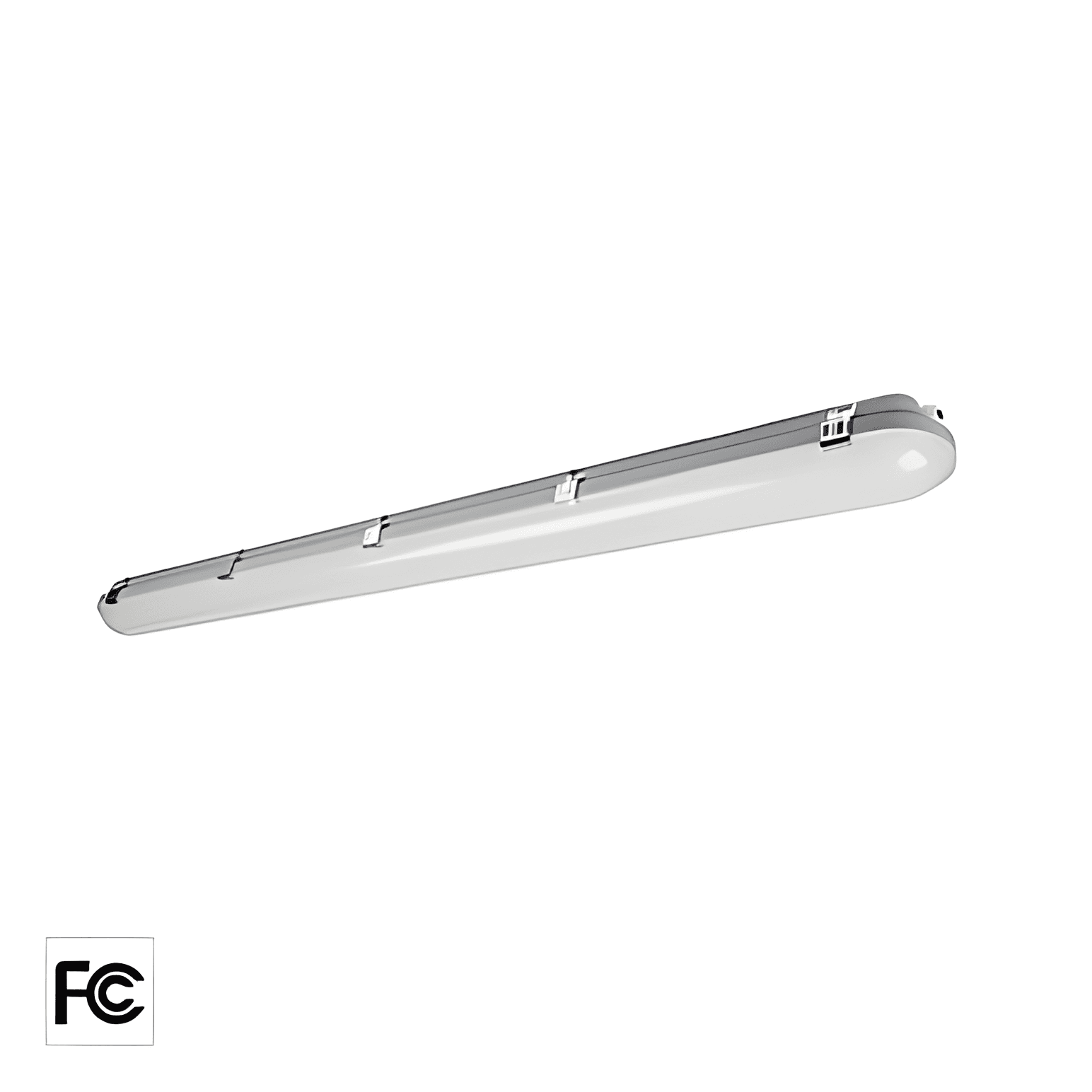
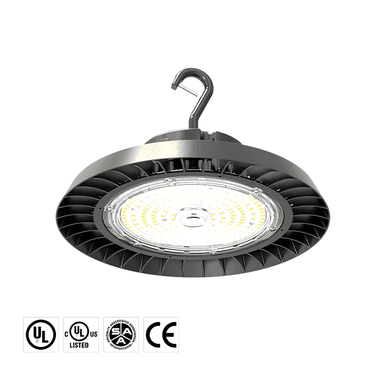
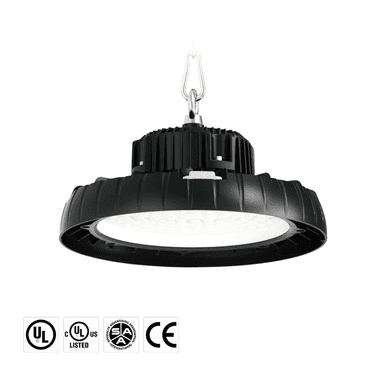
Recommended Products for Agricultural Lighting
IP65 vapor tights, high bays, flood lights, and area lights for every farm and agricultural facility
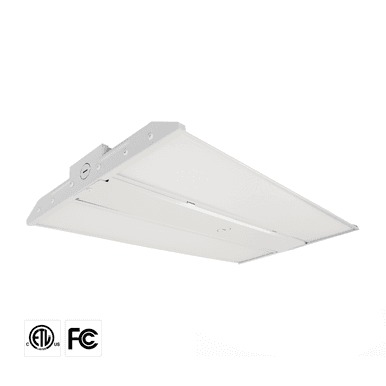
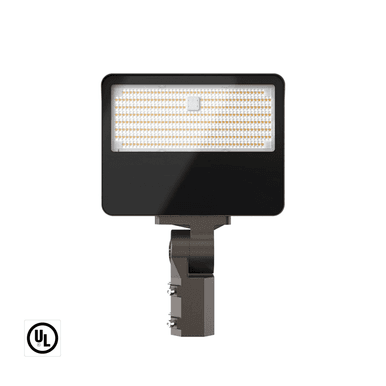
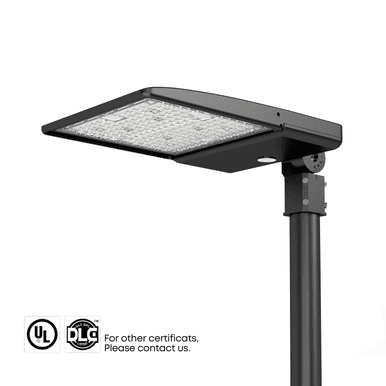
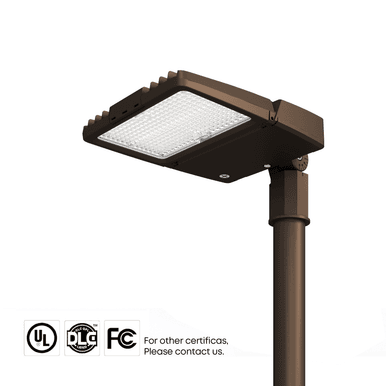
LED vs Legacy: Agricultural Energy Savings Comparison
Based on $0.12/kWh, 5,475 hrs/year (15 hrs/day × 365 days — typical dairy/poultry photoperiod)
8ft T12 Fluorescent (2 lamp)
4ft T8 Fluorescent (4 lamp)
400W Metal Halide
250W HPS Flood
1000W Metal Halide Yard Light
Agricultural LED fixtures also generate 60–70% less heat than HID, reducing barn cooling loads in summer and lowering heat stress on livestock. In poultry houses, dimming saves an additional 30–50% beyond the LED-vs-incandescent baseline.
Case Study
500-Head Dairy Operation — Tulare, CA
Replaced 48 × 8ft T12 fluorescent (150W) in freestall barns and milking parlor with Auvolar Vapor Tight VT8FT (80W). Implemented 16-hour photoperiod program at 20 fc maintained illuminance. Milk production increased 8% within 60 days of LED installation — attributed to consistent, uniform light levels impossible with aging fluorescents. Energy reduced 47%. Zero fixture failures in 24 months despite daily washdowns with chlorinated water. Maintenance calls eliminated entirely.
$5,200
Annual Energy Savings
8 mo
Payback Period
+8%
Milk Production Increase
Ready to upgrade your farm lighting?
Get a free photometric layout, ASABE compliance review, and energy savings analysis for your agricultural facility.